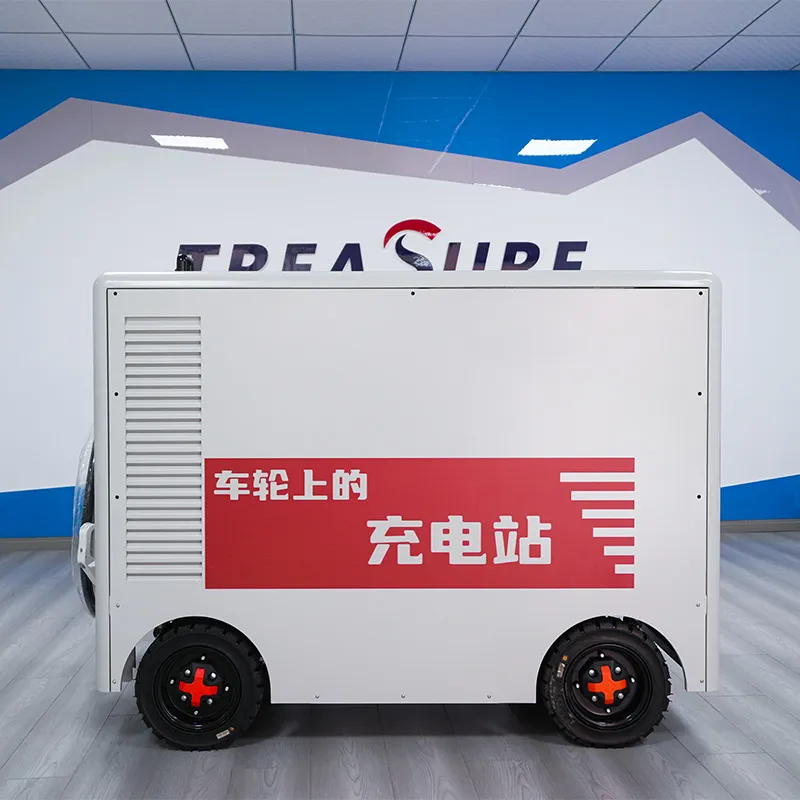
When vehicles need power but no charger is nearby, downtime grows, routes break, and customer service suffers. That problem gets worse for fleets, depots, ports, malls, and emergency teams. The practical answer is mobile EV charging: power that moves to the vehicle instead of waiting for the vehicle to move to power.
Mobile EV charging is an on-demand and flexible charging solution that brings energy directly to an electric vehicle, often through battery-powered mobile units with fast-charging capability. It helps fleets, parking operators, and service providers reduce delays, avoid heavy civil work, improve uptime, and support charging in places where a fixed charging station is limited, busy, or not yet built.
What is mobile EV charging and why is it growing so fast?
At its core, mobile EV charging means taking the charger to the vehicle instead of relying only on a fixed site. In practice, that can mean a battery-powered robot, a vehicle-mounted emergency charging unit, or other mobile charging units designed to deliver power where it is needed. TREASURE’s product line includes mobile charging robots, vehicle-mounted emergency power systems, V2V charging equipment, and integrated energy storage systems for B2B projects.
The market is growing because the broader EV market is growing fast. The IEA reports that global public charging points passed 5 million, and more than 1.3 million public charging points were added in 2024 alone. That growth is impressive, but it also shows the pressure on charging infrastructure. More EVs on the road mean more peak-time demand, more waiting, and more need for flexible mobile charging options that can support sites before or alongside permanent infrastructure.
For many operators, traditional ev charging is necessary but not enough. A fixed charger works best when parking behavior is predictable, power capacity is ready, and every bay can justify hardware and installation cost. Real operations are messier. That is where mobile charging technology creates value.
How does a mobile charging robot work in daily operations?
A typical mobile system is not just a battery on wheels. It is an integrated charging technology package. TREASURE describes its 150kWh mobile charging robot as a high-capacity unit that combines large-capacity energy storage, intelligent scheduling, and high-power fast charging for roadside assistance, appointment-based services, and parking lot operations.
In a daily workflow, the process is simple:
- Charge the unit during planned hours, often off-peak
- Dispatch it to the vehicle that needs energy
- Deliver fast charging or a temporary top-up
- Return the system to standby for the next task
That operating logic matters. It means mobile ev chargingallows energy to be moved in time and place. It also means site operators can build service models around real traffic patterns. For example, a mall can offer on-demand charging during busy hours. A depot can move power to the rows where vehicles actually park. A service team can use emergency roadside response for stranded vehicles.
What problems does mobile EV charging solve for EV charging service providers?
The biggest value of a strong ev charging service is not only electricity. It is uptime, convenience, and response speed. A fixed site can still face blocked bays, overloaded periods, weak utilization in low-demand hours, or expansion delays while permits and construction are still pending. A mobile charging service can fill those gaps.
TREASURE’s pages highlight practical use cases such as shopping malls, office buildings, depots, ports, terminals, and service stations. The site also points to real project situations where mobile charging robots were used to help address queueing and peak demand at energy stations. That is important because it shows how mobile ev charging solutions can work as an operational tool, not just a concept.
For an operator, the benefits are direct:
- Better use of existing parking space
- Lower dependence on a fixed charging station in every bay
- Faster launch of a new ev charging service
- Improved charging experience for users
- Backup power when ev charging stations are full or unavailable
This is especially relevant where you need charging station nearby performance without actually building a charger in every location.
Is mobile EV charging a good fit for roadside charging and emergency roadside assistance?
Yes, and this is one of the clearest use cases. TREASURE’s 150kWh mobile robot page says the system is designed for roadside charging assistance, appointment-based service, parking-lot value-added operations, emergency rescue, and temporary events. It specifically lists highway support and emergency roadside ev charging among the main scenarios.
When an electric vehicle runs low far from a charger, the problem is not theoretical. The driver needs enough power to continue the trip safely. In that situation, ev roadside charging assistance becomes a premium service. It can help service providers, towing companies, insurance partners, parking operators, and municipal response teams deliver a faster, more modern electric vehicle service.
This is where a reliable mobile ev charging service stands out. Instead of towing first and charging later, the operator may be able to dispatch energy directly. That can reduce recovery time, improve customer satisfaction, and create a new service category for partners that already manage roadside assistance or vehicle support.
Can mobile EV charging support off-grid EV charging and temporary sites?
Absolutely. One of the strongest advantages of mobile electric vehicle charging is flexibility in locations where permanent power is hard to deploy. TREASURE’s materials mention temporary events, municipal power use, remote charging scenarios, and situations where traditional charging infrastructure is not available. The company also positions mobile systems alongside stationary BESS, PV, and EMS coordination.
That makes off-grid ev charging especially relevant in these environments:
- Construction and infrastructure sites
- Ports and rail yards
- Remote logistics areas
- Temporary event venues
- Early-stage parking projects
- Disaster response zones
The IEA PVPS report on PV-powered charging stations also notes the importance of microgrid-based charging, photovoltaic integration, and intelligent energy management for charging infrastructure. In simple terms, mobile and modular systems fit naturally into distributed energy projects.
For B2B buyers, this matters because the business case is often not just “charge a car.” It is “keep operations moving before the final site is fully built.”

How do mobile EV charging solutions integrate with BMS, EMS, and site energy systems?
This is where advanced suppliers stand apart from simple equipment sellers. TREASURE explicitly states that its systems can coordinate with depot energy management systems, stationary BESS, PV, and the grid to optimize energy cost and charging schedules. That is a major point for professional buyers.
In a modern energy project, a charger is not isolated. It sits inside a wider system:
- Battery PACKs store energy
- BMS protects and balances the battery
- EMS schedules charging and discharge
- Cloud tools help track performance
- Site rules decide who gets power first
That means mobile charging solutions can become part of a broader scalable charging strategy. A fleet depot may charge the robots off-peak. A microgrid site may use solar plus storage to feed mobile battery chargers. A commercial property may deploy mobile units while planning permanent upgrades. This is how charging solutions designed for B2B projects create value beyond one charging session.
Where does mobile EV charging create the best return on investment?
The strongest ROI often appears where parking is dense, infrastructure is uneven, or charger demand changes by hour. TREASURE highlights logistics depots, corporate and government fleets, airports, ports, railway terminals, shopping malls, and service stations as typical applications.
In these environments, the return may come from several places at once:
- Lower civil work compared with adding a fixed charger at every bay
- Faster deployment of a new service
- Higher vehicle uptime
- Better use of off-peak energy
- New premium revenue from on-demand ev charging service
- Reduced queue pressure at fixed ev charging stations
A good rule is simple: if your vehicles move more than your parking design can predict, or if your charger demand spikes sharply at certain times, fast mobile ev charging may be worth serious evaluation.
How is TREASURE different as a mobile EV charging manufacturer and solution provider?
TREASURE is not positioned as a single-product seller. Its website presents a full portfolio that includes battery energy storage systems, cabinet-type BESS, mobile EV chargers, V2V devices, EV charging stations, battery PACKs, and BMS/EMS/cloud software. The homepage describes the company as an energy storage and mobile EV charging manufacturer for B2B projects, with more than 10 years of experience in battery systems and power electronics.
That matters because many buyers do not want only a box with wheels. They want fleet solutions. They want a supplier that understands energy storage, battery safety, software integration, and project delivery. TREASURE also states that it keeps core production steps in-house for better quality control and faster response.
For an overseas buyer, that combination can be useful:
- One partner for storage, charging, and control logic
- OEM/ODM flexibility
- Practical support for industrial and infrastructure projects
- A product range that can grow from emergency response to full fleet ev charging solutions
FAQs
How is mobile EV charging different from a normal charging station?
A fixed charging station stays in one place. Mobile EV charging brings the power to the vehicle. That makes it useful for depots, parking sites, temporary projects, and emergency support where a permanent charger is limited or unavailable.
Is mobile EV charging only for emergency roadside assistance?
No. It works for emergency use, but it also supports routine depot charging, shopping mall services, event operations, and mixed parking environments. TREASURE specifically highlights roadside support, appointment-based service, and parking-lot value-added charging.
Can mobile EV charging support all major EV brands?
Connector compatibility depends on the configuration and market standard. B2B buyers should confirm connector type, voltage range, power level, and regional requirements before deployment. TREASURE also offers OEM/ODM options for market-specific configurations.
Is mobile EV charging good for an electric vehicle fleet?
Yes, especially when a fleet uses changing parking patterns, shared depots, temporary bays, or staggered return times. It can reduce the need for a charger in every bay and improve uptime with more flexible dispatch.
Can mobile charging work with solar and energy storage systems?
Yes. TREASURE states that its robots can coordinate with stationary BESS, PV, EMS, and grid supply to optimize schedules and energy cost. That makes mobile systems a strong fit for solar-plus-storage and microgrid projects.
What should I send a supplier before asking for a proposal?
Send your vehicle types, daily mileage, parking layout, fleet size, charging window, connector needs, and local power conditions. TREASURE asks for these details because they help define the right configuration and service logic from the start.

 Mobile EV Charging Robots
 Vehicle-Mounted Emergency Power Supply
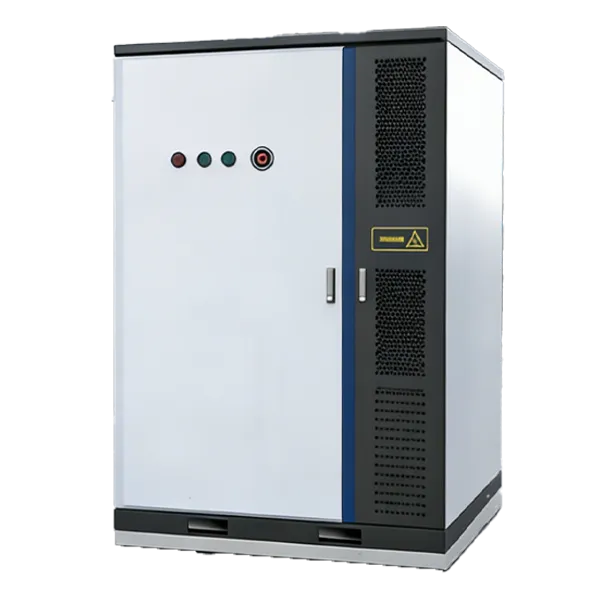 Energy Storage Systems
 EV DC Chargers Catalog
 V2V DC Charging Equipment