High power bills. Rising demand charges. Tight grid limits. Many sites need a smarter way to store and dispatch electricity. A 100kW battery energy storage cabinet gives commercial users a practical path to cut peaks, support loads, and use power more intelligently.
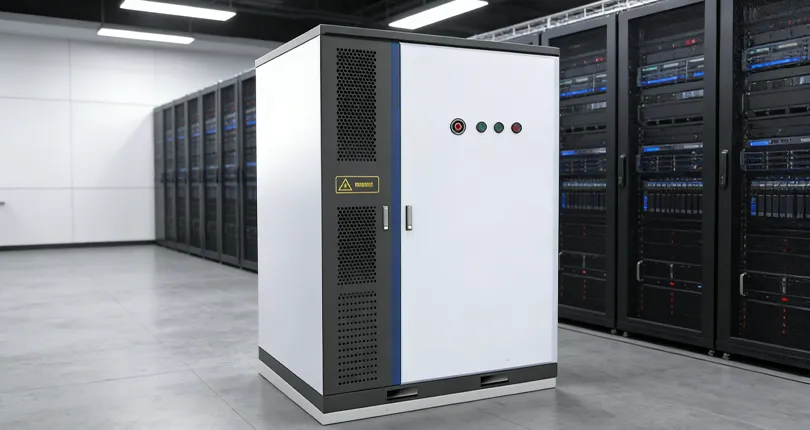
A 100kW/233kWh energy storage cabinet is an all-in-one battery energy storage system for commercial and industrial sites. TREASURE lists this model as 233kWh, although some buyers search for 232kWh. It supports grid-connected, off-grid, and solar-integrated use, with intelligent monitoring and remote management for better energy efficiency.
What is a 100kW/233kWh energy storage cabinet?
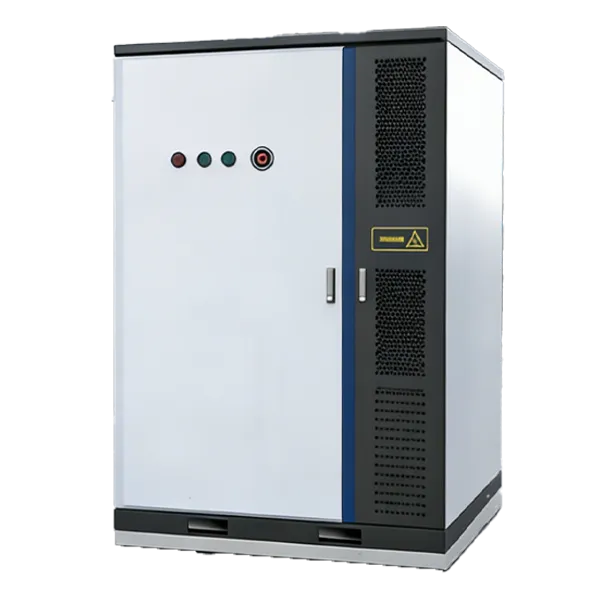
A 100kW energy storage cabinet is a compact energy storage system that combines the battery, control system, protection components, and power-side coordination into one outdoor-ready unit. On TREASURE’s official product page, this model is presented as a 100kW/233kWh cabinet for commercial use, with support for grid-connected, off-grid, and solar-storage integration.
In plain language, it stores electricity when power is cheap or clean, then releases it when your site needs support. That simple idea helps with backup power, time-of-use arbitrage, power quality, smoother energy utilization, and more stable power supply for daily operations. When paired with an energy management strategy, the cabinet becomes more than hardware. It becomes a working storage solution.
For many buyers, this size hits a sweet spot. It is large enough for real commercial and industrial value, yet still compact enough for faster deployment than a containerized BESS. That is why a 233kwh outdoor cabinet often appears in projects for factories, smart buildings, and distributed energy solutions.

How does an all-in-one outdoor cabinet simplify deployment?
The biggest advantage of an all-in-one design is speed. A separate battery room, separate inverter room, and separate control cabinet can work well, but they also increase civil work, wiring complexity, and coordination risk. An energy storage integrated cabinet reduces those steps by bringing key functions into one packaged unit.
TREASURE’s solution pages describe cabinet-type BESS architecture built around the outdoor battery cabinet, together with PCS, transformer, switching devices, and an intelligent EMS platform. In practice, that means easier interface planning for the EPC team and clearer division of responsibilities during on-site installation and commissioning.
For sites that need rapid deployment, this matters a lot. A factory owner usually does not want a long construction period. A parking operator does not want major downtime. An outdoor cabinet solution shortens the path from design to operation and makes future expansion more scalable, especially when the project may later add pv, ev charging, or another modular pcs block.
Quick specification snapshot
| Item |
What buyers should know |
| Rated power |
100kW output for commercial loads |
| Capacity |
Official TREASURE listing shows 233kWh |
| Typical use |
Commercial and industrial sites |
| Modes |
Grid-connected, off-grid, solar-storage integration |
| Monitoring |
Local HMI and remote monitoring |
| Project style |
OEM/ODM and project-level customization |
The table above reflects the official product positioning shown on TREASURE’s site.
What makes LiFePO4 battery technology a smart choice?
In this market, many buyers prefer lfp or lithium iron phosphate for one simple reason: safety and stability matter more than flashy specs. In a fixed energy storage battery project, long-term reliability, steady service life, and predictable maintenance usually matter more than chasing the highest cell number on paper.
TREASURE’s solution page specifically highlights LiFePO₄ cells for cabinet systems, noting long cycle life and high safety. That aligns with what serious commercial users want: a lifepo4 battery platform that works day after day, not just a system that looks good in a brochure.
From a practical procurement view, LFP also offers higher energy density than older lead-acid systems at the application level, while keeping operational safety attractive for fixed BESS projects. For a factory, warehouse, or data-center support load, that balance is often more valuable than extreme compactness.
Why do BMS, EMS, and intelligent control matter so much?
A cabinet is only as smart as its controls. The bms protects the battery pack at the cell and rack level. The ems decides when to charge, discharge, and hold reserve. The site-level management system then connects all of this to load behavior, tariff timing, and asset strategy.
TREASURE emphasizes in-house BMS, EMS, and cloud software, and its BMS page highlights multi-level protection, real-time status monitoring, alarm indication, emergency stop logic, and fault handling. That is not marketing fluff. That is the brain behind intelligent control and safer daily operation.
For buyers, the benefit is simple:
- Better visibility into cell temperature, voltage, and fault trends
- Smarter charging and discharging through energy management
- Improved system efficiency
- Easier remote service and firmware optimization
- Stronger support for project reporting and O&M
When a supplier has a smart bms and a capable energy management system ems, the project becomes easier to operate over time. That is especially important in demanding duty cycles, where thermal behavior, load spikes, and utility rules can all change how the system performs.
Can this cabinet work with PV, grid, gensets, and off-grid loads?
Yes. According to TREASURE’s official product and solution pages, the 100kW/233kWh cabinet supports grid-connected, off-grid, and solar-storage integration. The broader solution architecture also references PCS and transformer, plus integration with PV, site loads, and EV chargers.
That flexibility is one of the strongest selling points for a modern energy storage cabinet. A site can charge from the grid at night, absorb daytime solar, provide backup during an outage, and support stable power to selected circuits when the grid is weak. In some projects, it can also work alongside gensets to reduce fuel use and improve operating strategy.
I often explain this to buyers in one sentence: the cabinet helps power flow when and where it is most valuable. That applies to solar energy smoothing, peak shaving, load shifting, and support for uninterrupted power planning. It is not a small UPS. It is a broader commercial energy storage asset.
Typical operating combinations
| Scenario |
How the cabinet helps |
| Grid + load |
Peak shaving, tariff optimization, reserve power |
| PV + load |
Better self-consumption and smoother solar output |
| Grid + PV + EV charging |
Lower peak demand and better charging flexibility |
| Off-grid / weak-grid site |
Backup support and load balancing |
| Grid + gensets |
Reduced fuel dependence and better control |
These operating modes are consistent with TREASURE’s published solution direction.
What are the best application scenarios for a 100kW outdoor cabinet?
TREASURE positions this cabinet for commercial applications, industrial sites, smart buildings, and large installations that need monitoring and flexible dispatch. The broader company positioning also targets factories, warehouses, data centers, commercial buildings, EV fleet operators, ports, airports, mining sites, and energy infrastructure projects.
That creates a strong range of real application scenarios:
- Factory peak shaving and load balancing
- Warehouse and logistics center backup power
- Smart commercial building energy optimization
- Data-center support for critical but non-core loads
- EV charging support where grid capacity is tight
- Mining, port, and other demanding environments
- Remote or weak-grid projects, including some offshore support bases
What I like about this power class is its versatility. It is not too small to matter, and not too large to overbuild a mid-size site. A 100 kw cabinet can often serve as the first phase of a larger project, with room to configure future expansion.
Liquid cooling or air cooling: which design is better?
This is one of the most important engineering questions. Your keyword set includes liquid cooling, liquid-cooled, liquid cooling energy storage, liquid cooling energy storage cabinet, and air cooling. That tells me your buyers are not just shopping capacity. They are comparing thermal strategy.
In general, a liquid cooling energy storage system gives tighter temperature control, more uniform heat dissipation, and better consistency across cells in high-duty or hot-climate applications. In well-designed liquid-cooling systems, engineers often aim to keep the cell temperature spread very low, sometimes less than 3°C, because that supports better aging balance and more reliable operation. A liquid-cooled energy storage design can therefore be attractive for high-frequency cycling, hotter regions, or tighter enclosure layouts.
Air cooling, on the other hand, is simpler. It can reduce maintenance complexity and may work well for lighter-duty projects or cooler environments. So the right answer depends on climate, cycling intensity, dust, noise limits, and O&M preferences. If a tender starts from IP55 requirements, buyers should still verify the exact enclosure and thermal package. TREASURE’s official product page highlights IP67 outdoor protection for this model, which is notable for outdoor industrial use.
Why work with a manufacturer that also supports engineering service?
Because hardware alone is not enough. A true project partner helps you choose the right size, set the right control strategy, and avoid costly redesign later. TREASURE publicly positions itself as a BESS manufacturer and EV charging equipment supplier with full-stack r&d, strict quality control, and project engineering support.
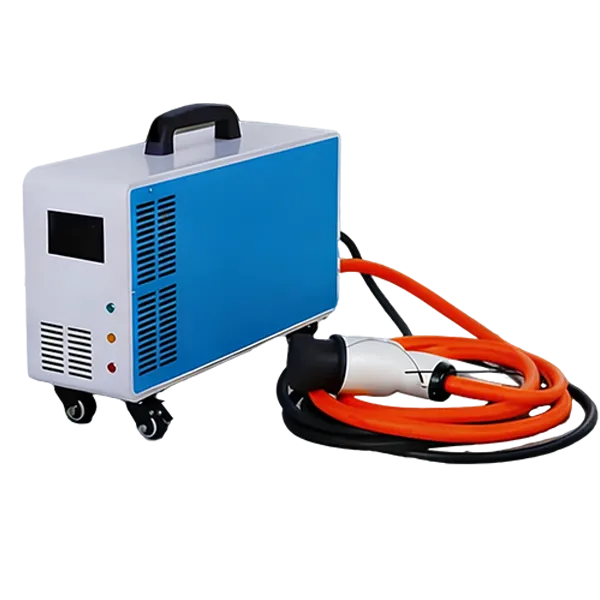
That matters if your site is complex. Maybe you want a cabinet today, mobile ev charging support next year, and a microgrid phase after that. Maybe you need commercial and industrial storage now, but later want dc fast charger integration. A supplier with deeper system knowledge can help you build in steps without losing compatibility. TREASURE’s published product and solution ecosystem covers cabinet BESS, BMS, EV charging, mobile charging robots, and project service, which fits that phased-growth logic.
That is also why the best B2B buyers rarely ask only, “What is your price?” They ask, “How will this system perform on my site?” That is the right question.
FAQs
Is the 100kW/233kWh cabinet suitable for a factory?
Yes. This size is well suited to industrial and commercial sites that need peak shaving, backup support, solar integration, or load management. TREASURE’s official positioning specifically includes commercial energy storage applications for industrial sites.
Yes. TREASURE states that the cabinet supports grid-connected, off-grid, and solar-storage integration, and its solution pages describe integration with PV, loads, and EV chargers.
What should I confirm before asking for a quotation?
Confirm your site load profile, tariff structure, transformer level, backup requirement, solar plan, installation space, and whether you want future ev charging or microgrid integration. Those inputs help the supplier size the cabinet and configure the PCS, controls, and protection properly.
Is liquid cooling always better than air cooling?
Not always. Liquid-cooling is often stronger in high-load or hot-climate operation, while air cooling may be simpler for lighter-duty projects. The right answer depends on environment, duty cycle, maintenance preference, and project economics.
Why choose a manufacturer with BMS and EMS capability?
Because the battery management system bms and energy management system ems strongly affect safety, dispatch logic, visibility, and lifetime value. TREASURE highlights in-house BMS, EMS, and cloud software as part of its full-stack R&D capability.

 Mobile EV Charging Robots
 Vehicle-Mounted Emergency Power Supply
 Energy Storage Systems
 EV DC Chargers Catalog
 V2V DC Charging Equipment