Many EV fleets and drivers still struggle with slow rollout, limited charging infrastructure, and the risk of getting stranded when plans change. The problem gets worse when a site cannot add a new charging station quickly. Mobile support solves that gap by bringing power to the vehicle instead of forcing the vehicle to find power.
Mobile EV charging is a charging service that uses a battery-powered mobile unit to deliver power where a car, van, bus, or work vehicle is parked. It can support fleet charging, emergency charging, off-grid ev charging, and overflow demand when fixed plugs are full, too far away, or too expensive to build right now.
Outline
What Is Mobile EV Charging?
How Does Mobile EV Charging Work?
How Fast Is Mobile EV Charging?
Is Mobile EV Charging Safe for EV Batteries?
Who Uses Mobile Charging Solutions Today?
When Is Off-Grid Mobile Charging Better Than a Fixed Charging Station?
FAQs About Mobile EV Charging?
What Is Mobile EV Charging?
Mobile EV charging means the charger goes to the vehicle. That is the big idea. Instead of waiting for permanent infrastructure, a battery-powered mobile unit brings power to the parking bay, roadside stop, or work yard. In simple terms, it is a flexible EV charging service for places where fixed hardware is too slow, too costly, or not practical yet.
This model matters because charging needs do not stay still. A depot may grow. A parking layout may change. A contractor may need temporary service areas for a few months, not ten years. That is where mobile charging solutions fit. They help with on-demand support, overflow demand, pilot projects, and early electrification when a company wants action now, not after long installation services and permit delays.

From our side as a manufacturer, we see the same pain points again and again: limited grid access, high upfront costs, and evolving needs at sites that cannot pause daily work. Mobile support does not replace every fixed site, but it fills a very real gap in today’s EV infrastructure.
How Does Mobile EV Charging Work?
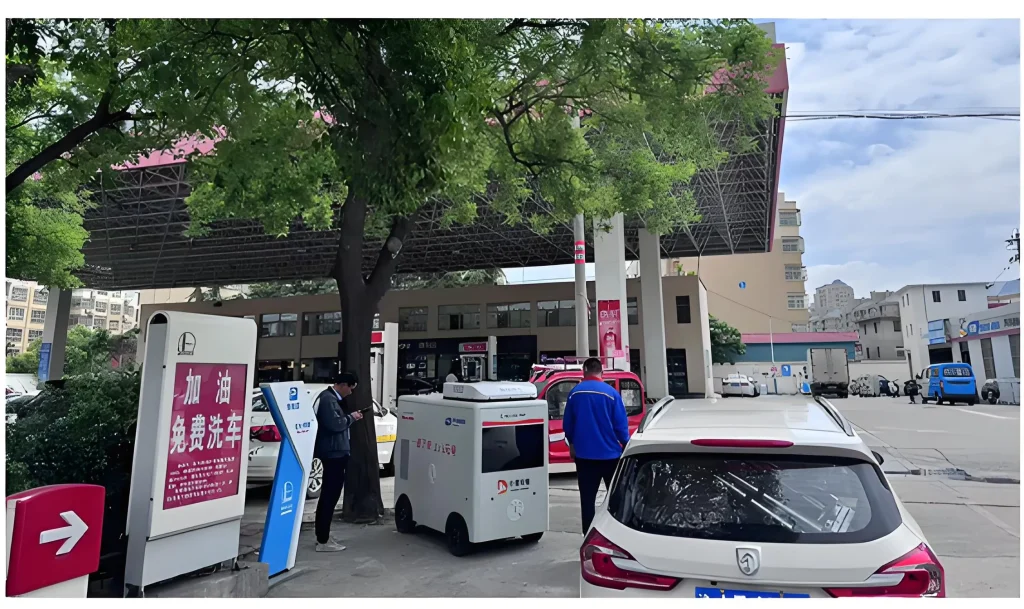
The process is straightforward. A battery-powered mobile unit stores energy first, then moves to the vehicle and transfers that energy through a charger. Some systems recharge from the grid during low-cost hours. Others can work with renewable energy, a depot battery, or off-grid mobile setups for special use cases. The goal is simple: provide reliable charging where the vehicle already is.
In many projects, the flow looks like this:
- The unit charges in a staging area.
- Software or staff dispatches it to a parked EV.
- The operator connects the cable.
- The unit delivers power until the target level is reached.
- The robot or mobile unit returns for the next task.
That sounds simple, and it is. But the operational value is bigger than the steps. Real-time availability, charging status visibility, and user-friendly control make the charging experience easier for both drivers and site managers. Some buyers call the unit a mobile EV charger. Others call it portable EV charging. Some even say mobile electric vehicle charger. The name changes. The purpose does not.
How Fast Is Mobile EV Charging?
Speed depends on the unit, the battery inside it, the vehicle’s acceptance rate, and the job itself. Some setups are best for emergency charging and light top-ups. Others act more like a fast charger or a DC fast charger for planned operations. In fleet work, faster charging is not only about peak kW. It is about how quickly you can get the right vehicle back into service.
A useful way to think about speed is to match the task to the tool:
| Use case |
Typical goal |
Best fit |
| Roadside support |
Enough energy to get back on the road |
Quick top-up |
| Depot overflow |
Add energy while vehicles wait |
Medium session |
| Shift turnaround |
Fast reset between jobs |
Level 3 / DCFC-type support |
| Temporary site power |
Keep operations moving without a new charging station |
Planned charging window |
Is Mobile EV Charging Safe for EV Batteries?
Yes, when the system is designed well and matched to the vehicle. Safety comes from proper battery management, good thermal control, correct connector standards, and clear operating limits. A quality charger does not simply push as much power as possible. It communicates with the vehicle and follows the charging profile the battery allows.
That matters because many EV owners still worry that fast mobile EV charging may damage the pack. In practice, safe charging depends less on whether the unit is mobile and more on whether it is engineered correctly. Good systems watch voltage, temperature, current, and session logic. They also stop when conditions are outside the allowed range.
From a buyer’s point of view, ask simple questions. Does the provider explain protection logic? Does the unit support seamless integration with the vehicle standard you need? Is there visible fault handling? Is the system all-in-one but still easy to service? Safe equipment should feel boring in the best way. It should just work, clearly and consistently.
Who Uses Mobile Charging Solutions Today?
This market is broader than many people think. The most obvious users are roadside support teams, tow trucks, and depot operators. But the list is growing fast. We now see interest from logistics, rental fleets, property groups, event operators, airports, ports, and industrial facilities that need flexible power without waiting for permanent infrastructure. For more information, please click here.
Common use cases include:
- Fleet services that need charging anywhere across a busy yard
- Dealer lots and workshops that move vehicles often
- Parking operators that want a charging service before a full retrofit
- Temporary projects with changing service areas
- Advanced EV programs inside ports, airports, and industrial zones
In the U.S., market trends show more interest in flexible charging as EV adoption grows and site owners look for scalable charging models. Across the US, one lesson is clear: one-size-fits-all buildouts rarely work. Sites have specific needs. A home charger makes sense at home. A mobile unit makes sense when vehicles move, demand shifts, or the site is still learning what the final layout should be.

When Is Off-Grid Mobile Charging Better Than a Fixed Charging Station?
Off-grid EV charging is better when the grid is weak, delayed, unavailable, or too expensive to upgrade right now. That is common at remote job sites, seasonal operations, overflow yards, test projects, and early-stage rollout programs. In those settings, off-grid mobile support can keep an electric vehicle moving without waiting months for construction.
A fixed charging station still matters for stable, high-volume sites. But a mobile option wins when flexibility matters more than fixed placement. It also helps when a business wants to avoid heavy trenching, utility redesign, and long approval cycles. For many buyers, the first phase is not “build everything.” It is “start smart, learn fast, and scale.”
FAQs About Mobile EV Charging
Is mobile EV charging only for emergencies?
No. Emergency charging is a common use case, but fleets, parking operators, workshops, and temporary sites also use it for daily operations.
Can mobile charging replace a fixed charging station?
Sometimes it can for early-stage or special sites. More often, it works best as a flexible layer beside fixed equipment.
Is it suitable for fleet charging?
Yes. It is very useful for overflow demand, changing depot layouts, and staged rollout programs.
What is the biggest cost advantage?
It can reduce or delay major site work, utility upgrades, and other upfront costs while still keeping vehicles moving.
Does it work in off-grid locations?
Yes. Off-grid EV charging is one of the strongest use cases when utility access is weak or delayed.
What should buyers ask before choosing a provider?
Ask about connector standards, safety logic, response model, software visibility, battery size, maintenance, and how the system fits your site’s specific needs.

 Mobile EV Charging Robots
 Vehicle-Mounted Emergency Power Supply
 Energy Storage Systems
 EV DC Chargers Catalog
 V2V DC Charging Equipment