When an EV stops with low power, waiting for a fixed charger wastes time, disrupts operations, and frustrates drivers. The problem gets worse for fleets, service teams, and remote sites. A vehicle mounted emergency power bank solves this by bringing power directly to the vehicle, fast.
A vehicle mounted emergency power bank is a mobile energy storage and DC charging system designed to deliver on-demand charging when fixed infrastructure is unavailable. Unlike a small consumer jump starter, it is a high-capacity B2B solution for EV roadside assistance, fleet backup charging, emergency response, and temporary charging deployment.
What Is a Vehicle Mounted Emergency Power Bank?
A vehicle mounted emergency power bank is a battery-based mobile DC charging unit installed on or transported by a service vehicle. Its job is simple: take energy to the EV instead of forcing the EV to find a charger. In B2B terms, it is a roadside EV charging solution designed for rescue work, fleet continuity, temporary operations, and flexible emergency deployment.
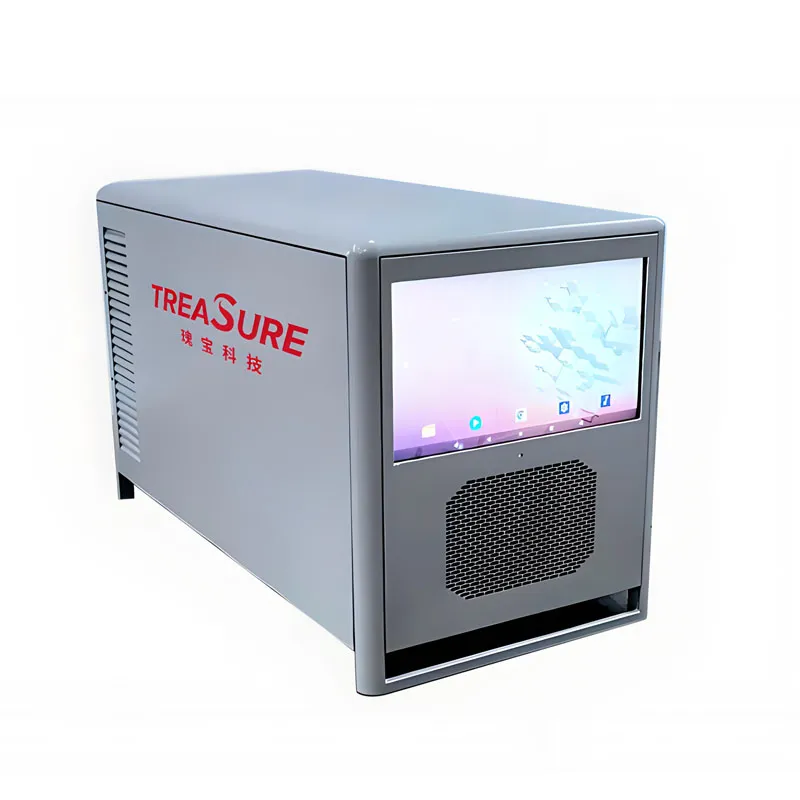
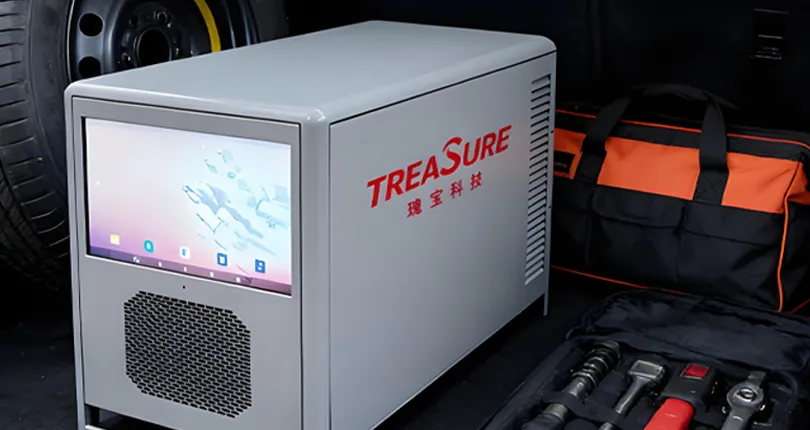
TREASURE positions this product as a 150kWh vehicle-mounted emergency charging power bank for new energy vehicles. The product highlights portable, on-demand top-up for EVs, with typical use in roadside assistance, emergency response, logistics fleets, temporary events, and outdoor special operations.
Many buyers first describe this kind of equipment with consumer language like power bank, portable charger, or even emergency power bank. That makes sense. But in real industrial projects, this is not a small car jump starter or a simple 12V rescue tool. It is a mobile DC charging system built for commercial duty, repeat deployment, and structured fleet or service operations. That distinction matters when you choose capacity, charging power, safety logic, and service support.
Why Is Mobile EV Charging Becoming More Important?
The EV market is growing fast, and charging demand is growing with it. According to the IEA, public chargers have doubled since 2022 to more than 5 million, and more than 1.3 million new public charging points were added globally in 2024 alone. That is strong progress, but it also shows how quickly infrastructure demand is rising.
Even with that growth, fixed charging does not solve every problem. Vehicles still run low in remote areas. Fleet vehicles still miss charging windows. Temporary sites still need power before permanent chargers are installed. Emergency teams still need fast, flexible deployment. That is where a mobile EV charger or vehicle-mounted emergency power supply becomes valuable: it closes the gap between infrastructure growth and real operating conditions.
For many commercial users, the question is no longer “Do we need charging?” The better question is “How do we keep operations running when charging access is limited, delayed, or unpredictable?” A fixed charger answers part of that question. A portable EV emergency charging system answers the rest. That is why this category matters for fleet operators, parking managers, service providers, and integrators working on high-uptime projects.
How Does a 150kWh Vehicle Mounted Emergency Power Bank Work?
The working logic is straightforward. The unit stores energy in its onboard battery system. When an EV needs help, the service team deploys the unit to the site, connects the charging cable, and delivers DC power through the charging interface. TREASURE describes the process as prepare, deploy, emergency top-up, and standby.
The typical package includes the main unit, a charging gun/cable set compatible with CCS/GB/T, a portable chassis, and an HMI for operation and monitoring. That combination matters because emergency charging is not only about battery capacity. It is also about safe connection, easy movement, and clear user control in stressful situations.
In practical terms, this gives operators a field-ready tool. It can support stranded passenger EVs, commercial vehicles, fleet backup, and special event deployment. The value is simple: power goes to the vehicle, not the other way around. That makes mobile charging especially useful when time, access, or location is the real bottleneck.
Where Is This System Used in Real Projects?
TREASURE lists several core application scenarios: EV roadside assistance, new energy vehicle rescue, logistics and commercial fleets, temporary events, special operations, and mobile energy support where a fixed charger is unavailable. The broader vehicle-mounted emergency power supply category page also adds roadside service providers, remote locations, and fleet charging backup.
That makes this product a strong fit for businesses such as:
- roadside assistance companies
- towing and rescue operators
- delivery and logistics fleets
- airport, port, or industrial park service teams
- fleet depots needing emergency charging backup
- temporary event operators
- integrators building mobile EV charging solutions for customers
A simple way to think about it is this: fixed chargers support routine charging, while vehicle-mounted emergency charging supports exception handling. And in commercial operations, exception handling is expensive. If a stranded EV blocks a job, delays a route, or creates a service failure, the cost is often much bigger than the charging event itself. That is why mobile emergency charging is not just a technical tool. It is an operational risk-control tool.
Why Choose a Vehicle-Mounted Unit Instead of Waiting for Fixed Chargers?
Fixed infrastructure is important, but fixed infrastructure is not always fast to deploy. It depends on permitting, site conditions, grid access, and construction schedules. The IEA notes that public charging continues to expand rapidly, yet access still varies by geography, user type, and charging behavior. That means mobile charging still has a real role even in fast-growing EV markets.
A vehicle-mounted emergency power unit helps in three ways. First, it gives operators immediate flexibility. Second, it reduces downtime when a vehicle cannot reach a charger. Third, it supports temporary or transitional demand before permanent infrastructure is ready. For many commercial sites, that combination is much more practical than treating every charging problem as a construction project.
It also changes the service model. Instead of “vehicles searching for chargers,” the operation becomes “chargers going to vehicles.” That is especially useful in crowded depots, high-turnover fleet yards, rescue situations, and remote work areas. In other words, a vehicle-mounted system does not replace infrastructure. It makes the overall charging system more resilient.
What OEM/ODM Options Matter for Integrators and Fleet Operators?
Not every project needs the same configuration. TREASURE states that it offers flexible customization including logo, label, enclosure color, UI language, connector configuration, monitoring mode, accessory packages, deployment support, documentation, training, and commissioning guidance. That is important because the buyer may be a fleet operator, a system integrator, a service contractor, or an OEM partner with a local market strategy.
In real projects, customization often decides whether deployment is smooth or painful. A buyer in one market may need CCS. Another may need GB/T. One project may want local-only monitoring. Another may require remote fleet supervision. Some teams need longer cable sets, spare parts kits, or custom HMI language to fit local operations. Those are not cosmetic details. They affect usability, training, and service speed.
TREASURE also positions itself as a company with in-house BMS, EMS, and cloud software capabilities, plus standardized manufacturing and strict quality control. For buyers planning larger deployments, that is valuable because it suggests the supplier can support not only a single hardware unit, but the wider control and management layer behind the project.
How Should Buyers Evaluate Deployment, FAT, and After-Sales Support?
A strong product page is helpful. A strong delivery process is even more important. TREASURE’s service page says it supports projects from early-stage planning to final acceptance, including pre-sales consulting, system design, OEM/ODM customization, implementation support, commissioning coordination, training, and documentation.
The 150kWh product page also states that quality control can include incoming inspection, assembly checks and traceability, functional testing before shipment, final inspection, and arranged FAT / witness support for project orders. For B2B buyers, these points matter because emergency charging units are not impulse purchases. They are operational assets that must work under pressure.
A practical supplier checklist looks like this:
- Is the configuration matched to our vehicle types and service model?
- What charging power and voltage range are confirmed?
- What documentation is included for export and commissioning?
- What FAT scope can be arranged?
- What spare parts are recommended with the first shipment?
- What operator training is included?
- How is remote support handled after installation?
- What monitoring and software options are available?
Buyers who ask these questions early usually reduce project risk later. Fast quoting is helpful. Fast quoting with technical clarity is better.

Is This the Right Solution for Your Business?
This solution is a strong fit when your business loses time or money because vehicles cannot reach a charger when needed. It is also a smart option when you need portable emergency EV charging, flexible deployment, and backup support without waiting for full fixed-site construction.
It is especially suitable if you operate:
- EV roadside assistance services
- commercial or logistics fleets
- parking or depot operations
- emergency response teams
- remote industrial or infrastructure sites
- pilot EV charging programs
- fast-moving OEM or integrator projects
The biggest mistake is to compare this product to a small consumer tool. A vehicle mounted emergency power bank is not mainly about convenience. It is about uptime, field response, charging flexibility, and business continuity. If those are your priorities, then this product category deserves serious attention.
Mini Case View: How Value Shows Up in Real Operations
Imagine a regional fleet service provider with dozens of EV vans. Most days, depot charging is enough. But on bad days, route changes, missed charging windows, or unexpected delays leave vehicles low on power. Sending them to a public station adds labor time, waiting time, and schedule disruption.
A 150kWh vehicle-mounted emergency charging unit changes that. The service team dispatches power to the stranded van, restores enough charge to continue the route or return to base, and keeps the operation moving. The value is not only the kilowatt-hours delivered. The value is the route saved, the delay avoided, and the customer service preserved. That is the kind of ROI B2B buyers actually feel.
FAQs
It is a mobile battery-based DC charging system that can be transported to an EV and provide emergency charging when fixed infrastructure is unavailable. TREASURE’s 150kWh model is designed for roadside rescue, fleet backup, temporary deployment, and emergency response.
Is it the same as a car jump starter?
No. A consumer jump starter is usually a small device for starting a low-voltage vehicle battery. A vehicle-mounted emergency power bank is a much larger mobile EV charging system built to deliver DC charging energy for electric vehicles in commercial or operational scenarios.
Who typically buys this kind of system?
Common buyers include roadside assistance providers, fleet operators, integrators, emergency teams, parking operators, and commercial sites that need fast and flexible charging coverage without depending entirely on fixed chargers.
What customization options are usually available?
TREASURE lists branding, connector configuration, UI language, monitoring mode, accessory packages, and deployment support as customization options. That makes the system easier to align with regional standards and project-specific operating needs.
Why is after-sales support so important?
Because mobile emergency charging systems must work reliably in real field conditions. Good support helps with commissioning, training, spare parts, monitoring, troubleshooting, and future scaling. TREASURE states that it offers one-stop engineering service from planning to final acceptance.

 Mobile EV Charging Robots
 Vehicle-Mounted Emergency Power Supply
 Energy Storage Systems
 EV DC Chargers Catalog
 V2V DC Charging Equipment