Quando um VE fica sem carga longe dos carregadores fixos, os atrasos transformam-se em tempo de inatividade, entregas perdidas e condutores insatisfeitos. Este problema agrava-se para as frotas, equipas de estrada e operadores de projectos. Uma solução V2V portátil de 20kW oferece-lhe um caminho de reserva mais rápido e flexível.
Um carregador V2V EV de 20kW é um dispositivo de carregamento DC portátil e compacto que permite que um EV ou uma fonte de energia móvel transfira energia para outro veículo elétrico. Em 2025, é importante porque apoia a resposta a emergências, o serviço móvel, a implantação flexível no terreno e a redução da dependência de estações de carregamento fixas quando o tempo, a localização ou o acesso se tornam um problema.
O que é um carregador V2V de 20kW e como funciona?
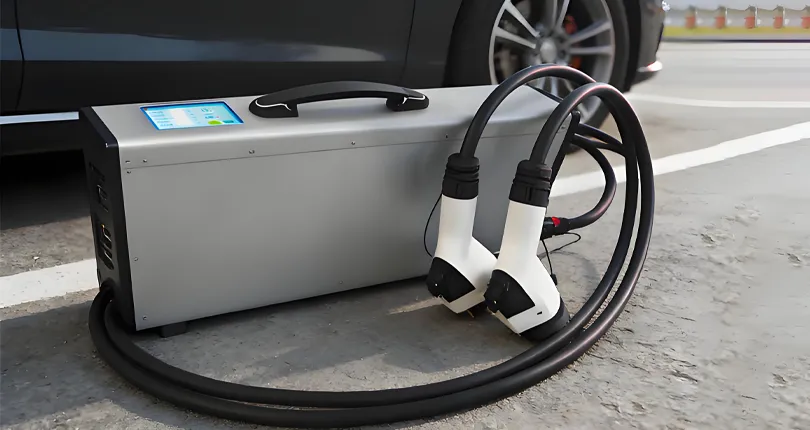
Um carregador de 20 kW construído para carregamento V2V foi concebido para transferir energia de uma fonte de energia móvel ou de uma fonte baseada num veículo para outro veículo elétrico que necessite de energia. Em termos práticos, o v2v é essencialmente uma forma de enviar energia utilizável de uma fonte com bateria para outro veículo sem depender apenas de estações de carregamento públicas ou fixas. A TREASURE apresenta o seu produto de 20kW como um dispositivo compacto e portátil Carregamento V2V para suporte bidirecional de VE, o que corresponde à orientação mais ampla do mercado para o salvamento móvel e o carregamento flexível no terreno.
A lógica de funcionamento é simples. A unidade actua como uma interface de carregamento CC, gere a conversão de energia e a comunicação e, em seguida, fornece uma saída controlada através do cabo de carregamento e da pistola de carregamento adequados. Os materiais do U.S. DOE e AFDC referem que o carregamento DC envia energia DC diretamente para a bateria, razão pela qual suporta um carregamento mais rápido do que os métodos AC básicos.
Para os leitores comerciais, o ponto-chave não é a teoria. É a usabilidade. Um carregador de 20kw v2v ev ajuda-o a colocar o carregamento onde o veículo se encontra, em vez de o obrigar a encontrar uma estação de carregamento ev fixa. Essa diferença é exatamente a razão pela qual os utilizadores B2B vêem valor no carregamento móvel para serviço, salvamento, transbordo de depósito e locais de trabalho remotos.

Porque é que o V2V está a tornar-se mais importante do que apenas os postos de carregamento fixos?
As estações de carregamento públicas e privadas estão a crescer, mas ainda não resolvem todos os problemas. Um veículo pode ficar retido numa estrutura de estacionamento, num parque logístico, num porto, numa faixa de serviço de um aeroporto ou numa zona de trabalho remota. Nesses casos, a infraestrutura fixa só é útil se o veículo a conseguir alcançar. O V2V altera essa lógica, levando a energia até ao veículo.
É por isso que a integração da v2v numa infraestrutura de carregamento mais ampla está a receber mais atenção. O DOE observa que a capacidade bidirecional dos VE pode acrescentar resiliência e valor de armazenamento móvel quando associada a equipamento compatível. Isto torna a tecnologia v2v relevante não só para emergências, mas também para operações comerciais planeadas.
Do ponto de vista do projeto, a vantagem é óbvia. É possível reduzir a necessidade de cada evento de carregamento depender de activos fixos de estações de carregamento CC. Em alguns casos de utilização, isso pode reduzir a pressão para o investimento imediato em infra-estruturas de carregamento adicionais da rede. O conceito não é que o V2V substitua todos os carregadores fixos. O conceito é que o V2V preenche as lacunas que os carregadores fixos não conseguem cobrir bem.
O que torna uma solução de carregamento portátil de veículos eléctricos valiosa para os utilizadores B2B?
Um produto de carregamento portátil tem um valor real quando o tempo de inatividade custa dinheiro. Isto é especialmente verdade para fábricas, armazéns, frotas, municípios, portos e empreiteiros de engenharia. Estes utilizadores preocupam-se mais com a velocidade de resposta, segurança e continuidade do serviço do que com a conveniência do estilo de consumo. Um carregador portátil de ev responde a essa necessidade, fornecendo às equipas uma fonte de alimentação de reserva móvel.
Em termos reais, uma estação de carregamento portátil de veículos eléctricos pode suportar:
- socorro na estrada
- transbordo do depósito
- tarifação de sítios temporários
- apoio a eventos
- serviço de apoio à frota
- operações de projectos remotos
É por isso que um formato portátil de carregador é muitas vezes mais útil do que parece à primeira vista. Dá a uma equipa um recurso móvel que pode ajudar mais do que um veículo em mais do que um local.
Qual é a velocidade de uma unidade de 20 kW em cenários de carregamento rápido no mundo real?
Uma unidade de 20kW situa-se abaixo dos centros públicos de CC de alta potência, mas continua a fornecer um carregamento rápido prático para salvamento, carregamento de transferência, recarga gerida e operações no terreno. O equipamento de carregamento rápido DC fornece energia DC diretamente à bateria, e os sistemas DC públicos abrangem uma vasta gama de níveis de saída.
Isto significa que uma unidade portátil de 20kw não está a tentar competir com todos os carregadores de autoestrada de potência ultra elevada. O seu papel é diferente. Foi concebida para um carregamento dc flexível, uma recuperação direcionada e um apoio controlado nos casos em que a mobilidade é mais importante do que o pico de potência bruto. Em suma, trata-se de um carregamento eficiente nos locais onde uma estação de carregamento rápido fixa não está disponível ou é impraticável.
Para os compradores B2B, a chave é fazer corresponder o produto ao trabalho:
- carregamento de transferência de emergência
- apoio à frota de veículos ligeiros e médios
- implantação temporária de sítios
- assistência rodoviária portátil v2v ev
- apoio móvel para o carregamento de veículos eléctricos
É também por isso que o mercado discute frequentemente famílias como produtos de 20kw 30kw ou mesmo 20kw 30kw 40kw. Projectos diferentes necessitam de diferentes equilíbrios em termos de potência, peso, refrigeração e ciclo de funcionamento.
Que caraterísticas técnicas devem os compradores verificar antes de escolherem um Carregador de veículos eléctricos V2V?
Comece pela compatibilidade dos conectores. O carregamento rápido DC depende de portas de carregamento compatíveis, dependendo do design do veículo e do mercado. Isto significa que a primeira questão a ter em conta na compra é simples: o tipo de carregador ev corresponde à sua frota atual ou aos veículos a que se destina?
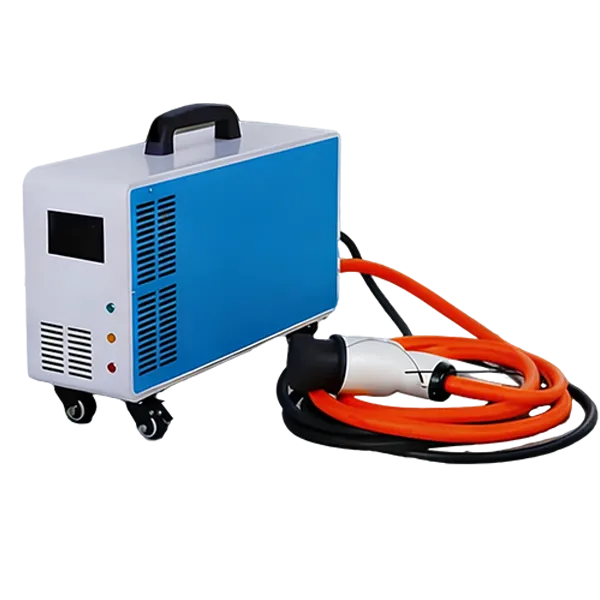
Em seguida, veja a arquitetura do sistema. Um carregador dc ev portátil sério deve oferecer uma saída DC estável, controlo térmico, cabo seguro e design de ficha, HMI clara ou lógica de interface e proteção de comunicação. Para projectos B2B, o sistema de carregamento também necessita de caixas duráveis, alarmes de avaria e facilidade de manutenção no terreno.
Em seguida, reveja os pormenores de trabalho:
- potência nominal e ciclo de funcionamento
- portabilidade e design do compartimento
- comprimento do cabo e cabo do carregador
- opções de conetor e pistola de carga
- suporte de alimentação CC externa ou com bateria
- caraterísticas de monitorização e serviço
O comprador deve também perguntar se a unidade é um modelo avançado de 20kw destinado a uma utilização comercial repetida ou apenas a uma utilização ocasional ligeira. Essa diferença influencia a fiabilidade, a mobilidade e o valor do ciclo de vida.
Como é que uma estação de carregamento DC se compara aos carregadores públicos tradicionais?
Uma estação de carregamento pública fixa é excelente quando o acesso é fácil, o veículo pode conduzir até lá e a fila de carregamento é gerível. O guia do DOE sobre carregamento público mostra o fluxo de trabalho normal: encontrar uma estação, confirmar os conectores, ligar, iniciar a sessão e monitorizá-la.
Um carregador dc ev portátil resolve um problema diferente. Suporta o veículo onde este se encontra. Isso torna-o útil quando:
- o EV não pode alcançar um carregador fixo
- a rota é sensível ao tempo
- o local é temporário
- o operador quer um modelo de estação de carregamento portátil
- o utilizador quer menos dependência de estações de carregamento fixas
Esta diferença é o motivo pelo qual um carregador DC para V2V não é apenas outro wallbox. Uma estação de carregamento EV wallbox pertence a um modelo de infraestrutura fixa. Um carregador veículo-a-veículo pertence a um modelo de resposta móvel. Ambos são importantes. Eles simplesmente respondem a diferentes necessidades de negócios.
Um produto V2V de 20kW é adequado para o seu projeto em 2026?
Um produto V2V de 20kW é uma escolha inteligente quando o seu projeto valoriza flexibilidade, velocidade de resposta e implementação no campo. É especialmente útil se os seus veículos operam em grandes locais, zonas urbanas de resgate, áreas remotas ou pontos de serviço temporários. Nesses casos, uma opção portátil de carregamento elétrico pode resolver problemas que ativos fixos não conseguem resolver rapidamente.
Também é uma escolha robusta quando o seu negócio deseja reduzir a necessidade de carregamento adicional da rede a curto prazo enquanto melhora a prontidão do serviço. Isso não elimina o papel dos locais permanentes. Apenas oferece outra camada de resiliência e suporte móvel enquanto a operação de EV cresce.
Uma lista de verificação simples de compras parece com isto:
- Precisa de uma solução portátil ou fixa?
- Irá oferecer suporte a resgate, frota ou uso em projetos temporários?
- Os seus veículos precisam de compatibilidade de carregamento por transferência DC?
- Quer uma unidade portátil estilo EV doméstico ou um produto verdadeiramente comercial?
- A sua equipa precisa de um carregador com caso de uso duplo e suporte mais amplo para energia móvel?
- Está a planear em torno de um veículo para compartilhar energia com outro EV em cenários de serviço controlados?
Se essas perguntas parecem familiares, um produto de 20kW V2V DC pode ser exatamente a ferramenta prática que a sua equipa precisa em 2026.
O que é um carregador V2V de 20kW?
Um carregador V2V de 20kW é um dispositivo de carregamento DC móvel que transfere energia de uma fonte de energia móvel ou uma fonte baseada em veículos para outro EV. Ele é projetado para implantação flexível, resgate e cenários de suporte comercial.
O carregamento V2V é mais rápido que o carregamento AC?
Em muitos casos, sim. O carregamento DC entrega energia diretamente à bateria, o que explica porque pode carregar mais rápido do que os métodos básicos de carregamento AC. A velocidade real depende do veículo, conector, condição da bateria e configurações do sistema.
Um carregador portátil V2V pode substituir as estações de carregamento fixas?
Não. É melhor visto como um suplemento flexível às estações de carregamento fixas, não uma substituição total. É mais valioso para necessidades de carregamento de emergência, móvel, remoto e temporário.
Quem deve comprar um carregador portátil V2V EV?
Compradores típicos incluem operadores de frotas, prestadores de assistência rodoviária, parques logísticos, municípios, aeroportos, portos, empreiteiros de engenharia e empresas de serviços de EV que precisam de suporte rápido no campo.
O que devo verificar antes de comprar?
Verifique a compatibilidade dos conectores, classificação de saída, portabilidade, design de segurança, refrigeração, configuração de cabos, suporte de serviço e se a unidade é construída para operação comercial repetida.
Por que 2026 é uma boa altura para considerar carregamento móvel de EVs?
Porque a adopção de EVs está a crescer, mas a infraestrutura fixa ainda não consegue cobrir todos os cenários. O carregamento móvel e bidirecional adiciona resiliência, flexibilidade de serviço e resposta mais rápida onde a infraestrutura estática é insuficiente.

 Robôs Móveis de Carregamento de VE
 Fonte de Alimentação de Emergência Montada em Veículo
 Sistemas de Armazenamento de Energia
 Catálogo de Carregadores DC de VE
 Equipamento de Carregamento V2V DC