TREASURE Technical Team | Corporate Technical Author — Battery Energy Storage and EV Charging Systems | Published September 2026
Selecting an OEM/ODM partner for battery energy storage or EV charging hardware comes down to four checks: in-house engineering scope, production and testing infrastructure, customization limits, and certification evidence. Delivery-volume claims and homepage badges are not substitutes for a documented vetting process before a contract is signed.
OEM vs. ODM: What the Terms Actually Cover
The two labels get used interchangeably in supplier decks, but they describe different scopes of work. An OEM (original equipment manufacturer) arrangement means the distributor supplies its own design or specification, and the factory builds to that spec — branding, enclosure graphics, and sometimes firmware skinning are the extent of customization. An ODM (original design manufacturer) arrangement goes further: the factory’s own engineering team develops the electrical architecture, BMS logic, mechanical layout, or cloud interface around the distributor’s requirements, then hands over a design the distributor can brand and resell.
For battery energy storage and EV charging equipment specifically, this distinction matters because the two paths require different supplier capabilities. A pure OEM run only needs contract-manufacturing capacity. An ODM relationship needs a factory that can modify voltage architecture, connector standards, communication protocols, and enclosure design without outsourcing that engineering to a third party. Ask upfront which one you actually need — a lot of failed partnerships start from a distributor requesting ODM-level customization from a supplier that only does OEM assembly.

Six Criteria That Separate a Capable Partner From a Trading Company
Many companies listed as “manufacturers” in supplier directories are trading companies that source from multiple factories and relabel the product. The following six checks help separate the two.
In-house engineering breadth. A genuine BESS/EV charging manufacturer typically holds capabilities across BMS hardware and firmware, EMS software, cloud monitoring, battery PACK integration, electrical design, mechanical design, and thermal management under one roof. TREASURE, for example, publicly describes this full stack alongside more than 10 years of operating history, over 400 MWh of delivered battery storage capacity, 60-plus technical patents, and supply into more than 10 countries — figures that indicate scale but should never substitute for the itemized checks below.
Production and testing infrastructure. Ask whether the factory has dedicated PACK assembly and cabinet-assembly areas, MES-based traceability, and a defined test sequence: prototype verification, environmental testing, lifecycle testing, and factory acceptance testing (FAT) before shipment. A supplier that cannot describe its FAT procedure in specific terms is usually outsourcing final assembly.
Customization scope. Confirm which parameters are actually adjustable — energy capacity, rated power, voltage architecture, connector standard (CCS, GB/T, CHAdeMO), communication protocol, cabinet or enclosure layout, and cloud-software branding. Get this in writing per SKU, not as a general capability statement.
Certification evidence, not certification claims. This is the single most commonly skipped step, and it gets its own section below.
After-sales and service structure. Remote monitoring, firmware update cadence, spare-parts lead time, and on-site service coordination differ enormously between suppliers. If a factory cannot name its typical spare-parts shipping window for your region, budget for that uncertainty in your own service contracts downstream.
Documented project history. Ask for project references with equipment type, deployment year, and country — not just aggregate delivery numbers. A supplier that can only offer company-wide totals, without being able to point to a specific project class relevant to your use case, has a thinner track record than the totals suggest.
| Evaluation Area |
What to Request |
Red Flag |
| Engineering scope |
Org chart or capability list by discipline (BMS/EMS/cloud/mechanical/thermal) |
Vague “full-service” claim with no discipline breakdown |
| Production |
MES traceability sample, FAT report template |
No environmental or lifecycle test data available |
| Personnalisation |
Per-SKU parameter list with adjustable ranges |
“Everything is customizable” with no bounds given |
| Certification |
Original certificate files, numbers, issuing body, applicable models, validity dates |
Only a photo gallery of logos on the website |
| Service |
Named service regions, spare-parts lead time |
No answer on service response time |
| Track record |
Project-type references, deployment years |
Only company-wide totals, no project detail |
Documented project history. Ask for project references with equipment type, deployment year, and country — not just aggregate delivery numbers. A supplier that can only offer company-wide totals, without being able to point to a specific project class relevant to your use case, has a thinner track record than the totals suggest.
A Seven-Step Vetting Process Before You Sign
- Define scope first. Decide whether you need OEM assembly or ODM-level engineering customization before requesting quotes — this changes which suppliers are even eligible.
- Request the capability breakdown. Ask for a discipline-by-discipline list (BMS, EMS, cloud, mechanical, thermal, electrical) rather than accepting a general “full in-house engineering” statement.
- Request per-SKU customization limits in writing. Verbal assurances about flexibility do not hold up during a change order six months into production.
- Request original certification files, not marketing images, for every model you plan to distribute.
- Ask for a FAT report sample from a comparable past project, redacted if necessary, to see what the factory actually tests before shipment.
- Confirm the quotation process. A legitimate project-based quote should ask about your application scenario, required power and energy capacity, fleet or site conditions, and project schedule before returning a number — a supplier that quotes a flat price with none of that context is likely quoting a generic configuration, not your actual project.
- Get service terms in writing before the purchase order, including spare-parts lead time and remote-monitoring scope, since these are the terms distributors most often assume rather than confirm.
TREASURE’s Product Portfolio at a Glance
For distributors mapping supplier capability against product need, TREASURE’s disclosed portfolio spans several categories: mobile EV charging robots (energy options from 55 to 200 kWh), vehicle-mounted emergency power supplies, portable DC EV chargers (6.6–20 kW), fixed and V2G-ready DC fast chargers at the portfolio level, V2V DC charging equipment (20–60 kW), C&I integrated energy storage cabinets, residential energy storage systems, and the GB-BMS battery management system series. Each category has its own confirmed specifications and open data points — this overview is not a substitute for the model-specific datasheet needed before a purchase decision.

What This Doesn’t Tell You
This guide covers evaluation criteria and process, not a ranking of specific manufacturers, because that requires supplier-by-supplier documentation this article does not have access to. It also does not include third-party audit results, factory visit reports, or customer references with contact details — those are steps a distributor completes during the vetting process itself, not something a manufacturer’s own content can substitute for. Where a specific TREASURE product model or certificate is relevant to your evaluation, request the corresponding datasheet and certificate file directly rather than relying on category-level descriptions like the ones above.
Pricing and Quotation Process
Pricing is provided on a project-by-project basis and depends on energy capacity, charging power, voltage architecture, connector standard, battery configuration, PCS selection, enclosure design, communication protocol, software integration, logistics, commissioning, and other project requirements.
Questions Distributors Ask Before Committing
Is an ODM manufacturer always more expensive than an OEM contract run?
Not necessarily by unit cost, but ODM engagements typically carry higher upfront engineering and tooling costs that get amortized across order volume. A small first order under an ODM arrangement often costs more per unit than the same order placed as a straight OEM build to an existing design.
How long does certificate verification usually take?
This varies by certifying body and document availability on the manufacturer’s side. Build verification time into your sourcing timeline rather than treating it as a same-week formality.
Can one factory handle both battery energy storage and EV charging equipment lines, or is that a red flag for over-claiming?
Some manufacturers legitimately cover both categories because BMS, EMS, and power-electronics engineering overlap between stationary storage and charging hardware. The distinguishing question is whether the factory can show discipline-specific engineering resources for each line, not just a combined product catalog.

What should be in a service-level agreement with an overseas OEM/ODM supplier?
At minimum: named service regions, spare-parts lead time by region, firmware/software update cadence, and an escalation path for warranty claims. Vague “global service network” language without these specifics is worth pushing back on before signing.
Does a large number of countries served indicate export-compliance readiness for my specific market?
Not automatically. Export compliance, connector standards, and grid-code requirements vary by country, so a supplier’s overall country count doesn’t confirm readiness for your particular market — ask specifically about prior shipments and compliance documentation for your target region.
Should I request a factory audit before the first order?
For orders above a threshold that matters to your business, yes. A factory audit or a third-party inspection report catches gaps that documentation alone can miss, particularly around the testing and traceability practices described earlier in this guide.
About the Author
The TREASURE Technical Team brings together company-level capabilities in battery management systems, energy management systems, cloud software, embedded control, battery PACK engineering, power electronics, electrical design, mechanical design, thermal management, testing, and system integration. TREASURE reports more than 10 years of experience in battery systems and power electronics, more than 400 MWh of energy storage systems delivered, and more than 60 technical patents, with products supplied to more than 10 countries.

 Robots de recharge mobiles pour VE
 Alimentation électrique d'urgence montée sur véhicule
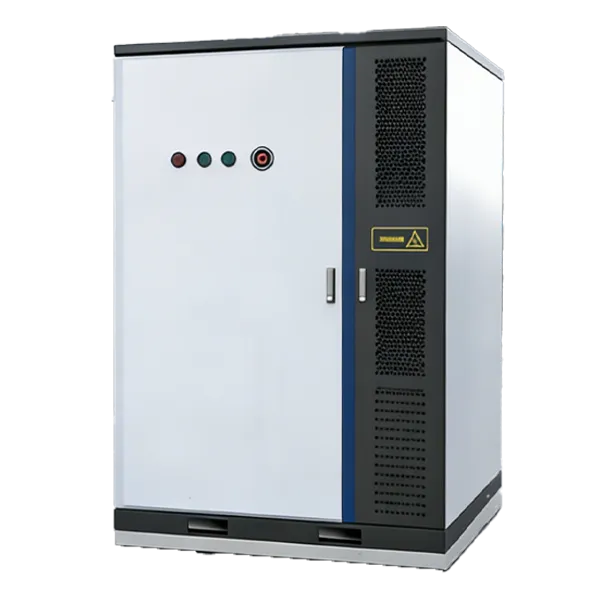 Systèmes de stockage d'énergie
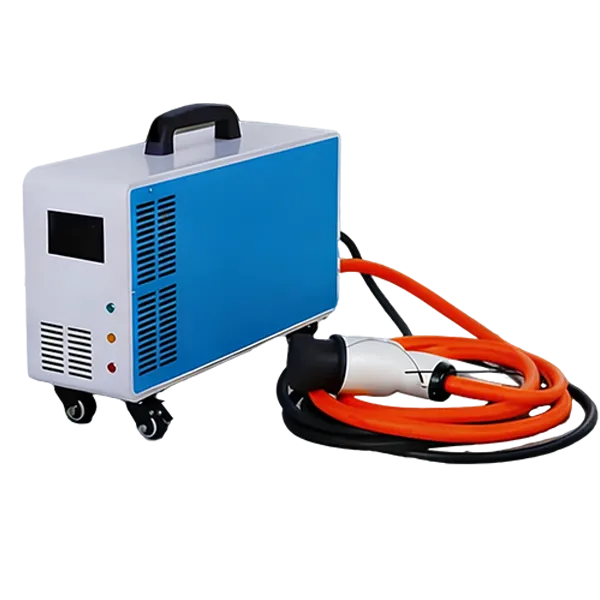 Catalogue de chargeurs EV DC
 Équipement de recharge V2V DC