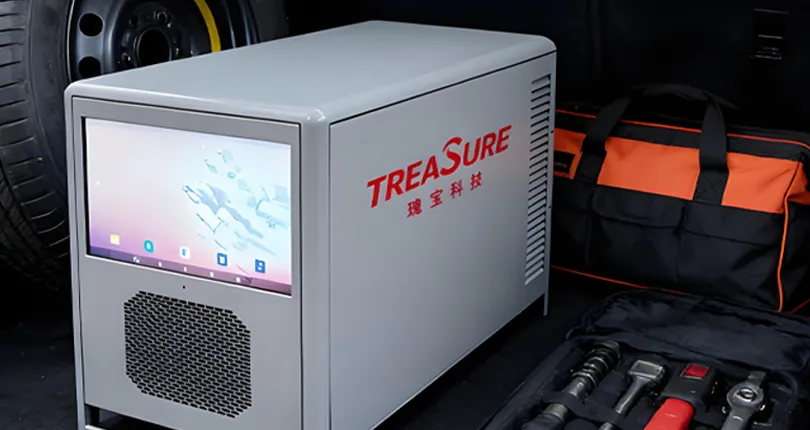
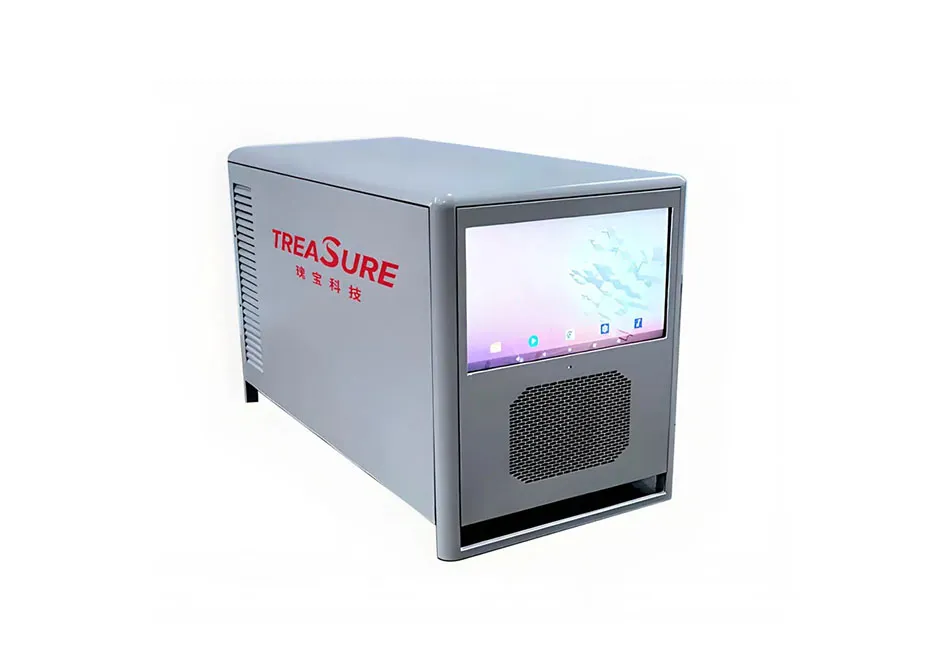
As a key piece of emergency equipment for drivers, a vehicle emergency charging power bank requires more than just correct use. Only with careful day-to-day maintenance can it avoid failing at critical moments and effectively extend its service life. TREASURE Technology believes that mastering the following maintenance methods can help keep the device in good working condition at all times.
First
Control the storage environment and avoid damage caused by extreme conditions. The core component of a vehicle emergency charging power bank is the battery, which is sensitive to temperature and should be kept away from both high and low temperatures. When storing it in the car, do not leave it under the front windshield in direct sunlight, and do not keep it in an extremely cold trunk for long periods during winter. It is better to place it in the center console or in a shaded area of the trunk. If the device will not be used for a long time, it is advisable to take it home for storage, with the ambient temperature kept between 0°C and 40°C. It should also be kept away from damp areas to prevent internal components from becoming moist and short-circuiting. In addition, the device should be protected from pressure and impact during storage to avoid casing damage or internal structural displacement.
Second
Maintain the battery charge properly to prevent battery aging. If the battery of an emergency charging power bank remains fully charged or excessively discharged for a long time, its aging process will accelerate. It is recommended to develop the habit of recharging the device regularly, ideally once a month, and keeping the battery level between 50% and 80%. This helps avoid battery damage caused by overcharging while also preventing capacity loss caused by deep discharge. If the battery level drops below 20%, it should be recharged promptly, and the device should not be left in a low-power state for an extended period. After each use, it should also be recharged as soon as possible to ensure sufficient power for the next emergency.
Third
Pay attention to component cleaning and keep the device in good condition. The jumper clamps are an important part of the emergency charging power bank and should be cleaned promptly after use. Use a dry cloth to wipe away dust and oil from the clamp surface. If the clamps are accidentally exposed to corrosive liquids such as battery fluid, wipe them clean with a dry cloth before storing them to prevent rusting of the metal clamps and a decline in conductivity. The device ports should also be checked regularly. If dust has accumulated, it can be gently cleaned with a dry cotton swab to prevent blocked ports and poor contact during charging or jump-starting.
Finally
Carry out regular comprehensive inspections to identify potential problems in advance. It is recommended to perform a full inspection of the vehicle emergency charging power bank every three months. Check whether the casing has any cracks or damage. If the shell is damaged, it should be repaired or replaced promptly to prevent the internal components from being exposed to moisture. The wiring should also be checked for signs of aging or damage, and the copper wire of the jumper clamps should be examined to ensure that no conductor is exposed. If any problem is found, the device should be taken out of service until it is properly handled. At the same time, test the charging and output functions of the device to ensure that the ports can supply power normally and that the digital display can accurately show the battery level, so that functional faults do not affect emergency use.

 Mobile EV Charging Robots
 Vehicle-Mounted Emergency Power Supply
 Energy Storage Systems
 EV DC Chargers Catalog
 V2V DC Charging Equipment