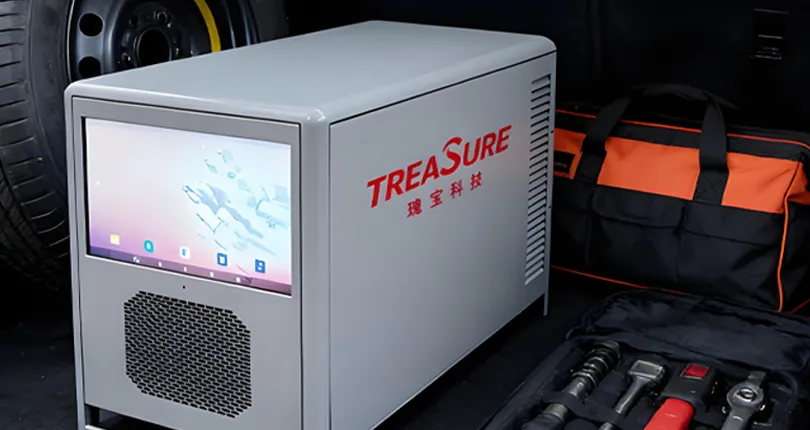
With the growing popularity of new energy vehicles and the rise of self-driving travel, vehicle-mounted charging power banks have become an essential tool for car owners to deal with unexpected battery depletion, extreme weather, and other emergency situations. However, product quality in the market varies greatly. Blindly choosing the wrong product may not only fail to help in an emergency, but could also create safety risks. TREASURE Technology believes that if you want to choose the right vehicle-mounted charging power bank, the following points deserve close attention.

First
Pay attention to peak current, not just battery capacity. Many people assume that the larger the capacity, the better the product. In fact, peak current is the key factor that determines whether the device can successfully start a vehicle. For ordinary family sedans with engines around 1.6L to 2.0L, a peak current of 300A to 500A is usually sufficient. For SUVs, off-road vehicles, or models with engines above 2.0L, products rated at 500A to 800A are recommended. For trucks, large SUVs, and similar vehicles, a model with more than 1000A peak current is a better choice. At the same time, consumers should be cautious of products that only display “rated current” while hiding the peak current, as these often involve exaggerated specifications and may fail when needed most.
Second
Choose capacity rationally and avoid blindly pursuing larger numbers. For normal daily use, a capacity of 10,000mAh to 15,000mAh is generally enough. It can start the vehicle and also recharge a smartphone two or three times. For long-distance road trips or outdoor camping, a 15,000mAh to 20,000mAh model may be more suitable, as it can also power devices such as camping lights and tablets. Products with capacities above 20,000mAh are usually much larger and heavier, take up more space in the vehicle, and often offer lower cost performance for everyday use.
Third
Interface configuration should be comprehensive enough to meet multiple needs. The jumper clamp port is the core interface for starting a vehicle, and it is best to choose a model with reverse polarity protection to prevent damage caused by incorrect connection of the battery terminals. In addition, the device should include at least one USB-A port and one Type-C port for charging phones, earphones, and other electronic devices. If outdoor power use is also required, a product with a DC output port or USB-C PD fast charging is worth considering, as it can support laptops and camping equipment and greatly improve practicality.
Fourth
Safety protection features are essential. Since a vehicle-mounted charging power bank involves electrical safety, basic functions such as overcurrent protection, overvoltage protection, and short-circuit protection are indispensable. Reverse connection protection and temperature protection are also very important. The former helps prevent faults caused by connecting the battery terminals incorrectly, while the latter helps avoid overheating during charging or jump-starting. In addition, products with flame-retardant casing materials are recommended for a higher level of safety.
Finally
Portability and thoughtful design details can significantly improve the user experience. A product weight of around 500g to 800g is ideal, as it is easy to handle even for female drivers and convenient to store in the center console or trunk. Models equipped with a digital display are also worth choosing, since they allow users to monitor the remaining battery level in real time and avoid finding the device empty at a critical moment. For the jumper clamps, thickened copper wires are recommended for better conductivity, while anti-slip clamp designs can ensure a firmer grip on the battery terminals and reduce the chance of slipping off during use.
In short
When choosing a vehicle-mounted EV charging power bank, car owners should not judge a product solely by capacity or price. Instead, they should carefully evaluate its peak current, reasonable capacity, interface configuration, safety protection, portability, and detailed design. Only by considering these factors comprehensively can they select a truly reliable product that provides peace of mind on every journey.

 Mobile EV Charging Robots
 Vehicle-Mounted Emergency Power Supply
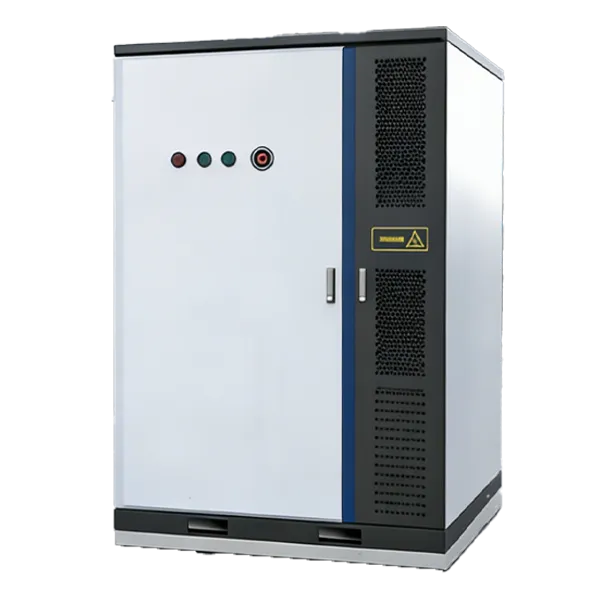 Energy Storage Systems
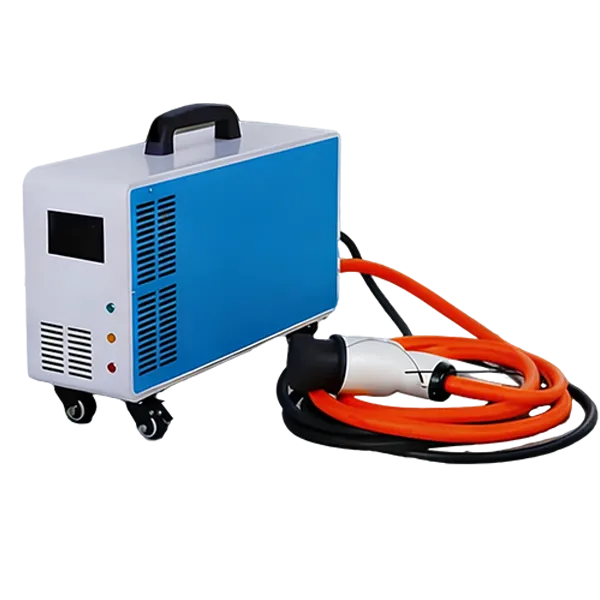 EV DC Chargers Catalog
 V2V DC Charging Equipment