TREASURE Technical Team | Battery Management Systems & Power Electronics | Published July 30, 2026
A lithium battery pack is only as reliable as what’s watching it. A battery management system (BMS) reads voltage, current, and temperature at the cell level, then acts on that data — balancing charge, flagging faults, and cutting power before a fault becomes a fire. That monitoring layer is what separates a pack that lasts eight years from one that doesn’t.
What a BMS Actually Watches
Most explanations of a BMS stop at “it protects the battery.” That’s true but not useful for someone specifying a system. In practice, a BMS is doing four things continuously: sampling individual cell voltage, sampling temperature across multiple points in the pack, calculating state of charge (SOC) and state of health (SOH), and deciding when to intervene — through balancing, a warning signal, or a hard cutoff.
The quality of that intervention depends on two numbers most buyers never ask about: voltage sampling accuracy and the number of temperature channels. A BMS that samples voltage to within ±1 mV can catch a cell drifting out of balance long before it affects pack performance. A BMS that only reads temperature at two or three points in a large pack can miss a hot spot forming between sensors — which matters more in packs mounted on vibrating equipment than in a stationary rack.
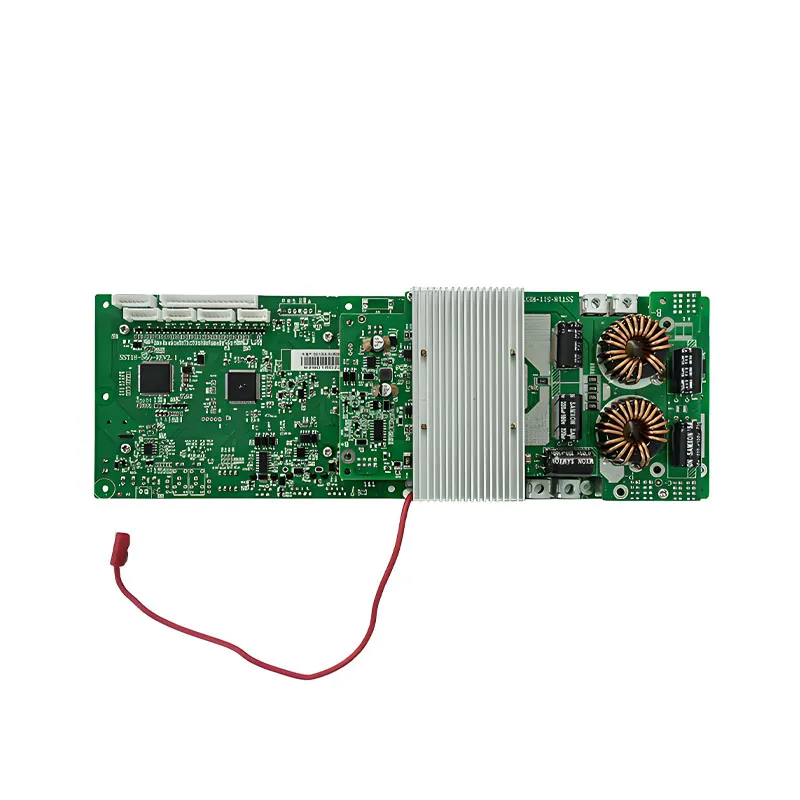
Why a Three-Level Architecture Changes What’s Possible
A single-board BMS handles everything — sensing, balancing, and communication — in one circuit. That works for small packs, but it puts a ceiling on how many cells and modules the system can manage reliably, and it usually means the pack-level communication logic is an afterthought.
Da TREASURE GB-BMS Series is built as a three-level architecture instead: cell-level sensing, module-level balancing, and pack-level communication and protection sit on separate but coordinated layers. Compared with common chip-level BMS approaches that stop at individual-cell monitoring, this structure lets diagnostics and protection logic run at the pack level without waiting on a single overloaded controller to process every signal.
| Layer |
What It Monitors |
GB-BMS Specification |
| Cell-level |
Individual cell voltage |
±1 mV acquisition accuracy |
| Cell-level |
Temperature across the pack |
16 channels, ±0.5°C accuracy |
| Module-level |
Cell balancing |
Active balancing at 2 A, passive balancing at 200 mA |
| Pack-level |
System communication |
CAN 2.0B, RS485, Ethernet |
| Pack-level |
Protection and diagnostics |
SOC/SOH estimation, fault diagnosis and warning |
That balancing split is worth pausing on. Active balancing at 2 A moves charge between cells quickly; passive balancing at 200 mA burns off excess charge as heat, which is slower but simpler and cheaper to implement. A pack that leans entirely on passive balancing will take meaningfully longer to bring badly mismatched cells back into alignment — something to ask about if your application cycles hard and often.
The Mistake Buyers Make With Temperature Range, Not Just Channel Count
Here’s an edge case that trips up buyers more than accuracy specs do: assuming a BMS rated for a wide operating temperature range will perform the same at both ends of it. GB-BMS is rated for −40°C to 85°C operation with an IP67 enclosure rating, which matters for equipment that sits outdoors or moves between environments — a mining vehicle starting a cold shift versus an airport ground-support unit sitting on hot tarmac are not the same thermal problem, even though both fall inside the same stated range.
The channel count matters here too. Sixteen temperature channels across a pack gives you resolution to catch a localized hot spot near a compressor or motor mount — a single-point sensor won’t. If your application vibrates constantly (forklifts, AGVs, mining vehicles), ask specifically how sensor placement is validated, not just what the channel count is on a datasheet.
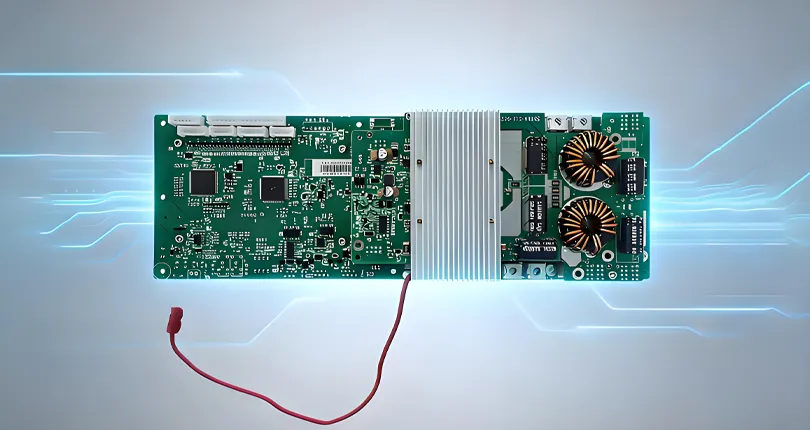
Where This Fits: Residential Racks to Grid-Scale Cabinets
GB-BMS is built to serve residential, commercial, industrial, grid-scale, and e-mobility battery systems from one architecture rather than a different board for each tier. For special-vehicle and industrial-vehicle OEMs specifically — forklifts, AGVs/AMRs, mining vehicles, airport ground equipment — that matters because it means BMS integration doesn’t have to be re-engineered from scratch every time pack size or vehicle class changes.
That said, one real trade-off applies here: a three-level architecture with pack-level CAN/RS485/Ethernet communication has to be matched to whatever control protocol your vehicle already runs. That’s an integration step, not a plug-and-play swap, and it’s worth scoping before committing to a battery pack design.
Sourcing a BMS for a Custom Battery Pack: What to Check
- Confirm the accuracy specs against your cell chemistry. ±1 mV voltage accuracy and ±0.5°C temperature accuracy are meaningful numbers — ask any supplier to confirm them against your actual cell type, not a generic datasheet.
- Check balancing current against your duty cycle. If cells see frequent full charge/discharge cycles, active balancing at higher current (2 A here) keeps cells aligned faster than passive balancing alone.
- Match communication protocol to your existing control system. CAN 2.0B, RS485, and Ethernet cover most industrial and vehicle platforms, but confirm compatibility before finalizing pack design.
- Verify the operating temperature range against your actual deployment environment, not just the ambient average — cold starts and heat soak both stress a BMS differently.
- Ask how SOC/SOH estimation is validated, since this is what determines whether the pack’s reported remaining life is trustworthy for maintenance planning.
Battery-safety monitoring is one of the areas the industry treats seriously at a system-design level — the U.S. Department of Energy’s Energy Storage Safety Strategic Plan frames BMS-level fault detection as a core layer of energy storage risk management, not an optional add-on.
FAQ
Q: What’s the practical difference between active and passive cell balancing?
A: Active balancing moves charge from a higher cell to a lower one using power electronics — faster, but more complex. Passive balancing burns off excess charge from higher cells as heat through a resistor — simpler, but slower. GB-BMS uses both: active balancing at 2 A and passive balancing at 200 mA, so the system can choose the faster method when cells are significantly out of balance.
Q: Does a wide operating temperature range mean the BMS performs identically at both extremes?
A: Not necessarily. A −40°C to 85°C rating means the system will function across that range, but cold-start behavior and sustained heat exposure stress different components. If your equipment operates at one extreme regularly, ask your supplier how that specific condition was validated, not just whether it falls inside the rated range.
Q: What communication protocols does GB-BMS support?
A: CAN 2.0B, RS485, and Ethernet. Which one you use depends on what your vehicle or system controller already runs — this needs to be confirmed during integration, not assumed from the spec sheet.
Q: What does a GB-BMS system cost?
A: Pricing is provided on a project-by-project basis and depends on cell count, communication protocol, enclosure requirements, and integration scope. There’s no fixed public price list — submit your pack configuration for a quote.

 Robôs Móveis de Carregamento de VE
 Fonte de Alimentação de Emergência Montada em Veículo
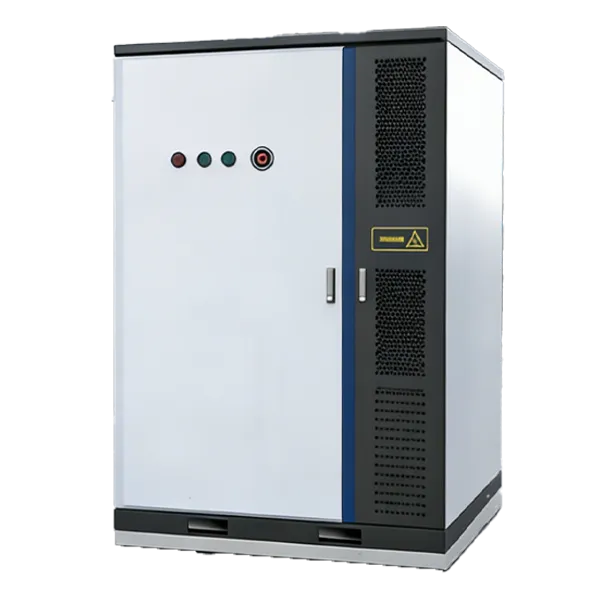 Sistemas de Armazenamento de Energia
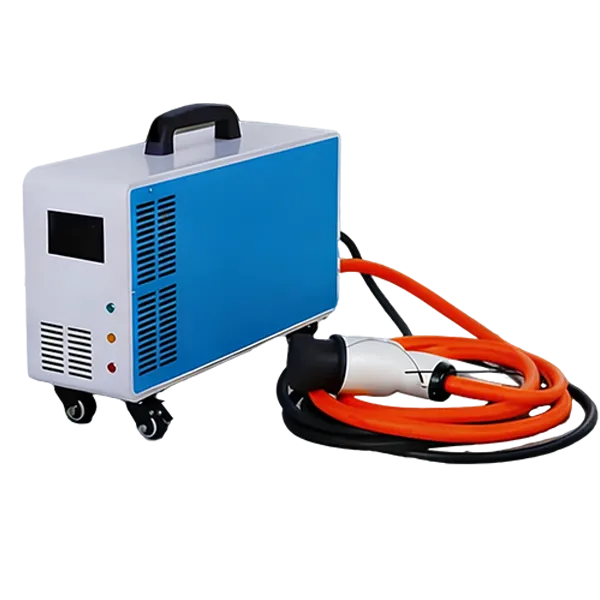 Catálogo de Carregadores DC de VE
 Equipamento de Carregamento V2V DC