TREASURE Technical Team | Corporate Technical Author — Battery Energy Storage and EV Charging Systems | Published September 2, 2026
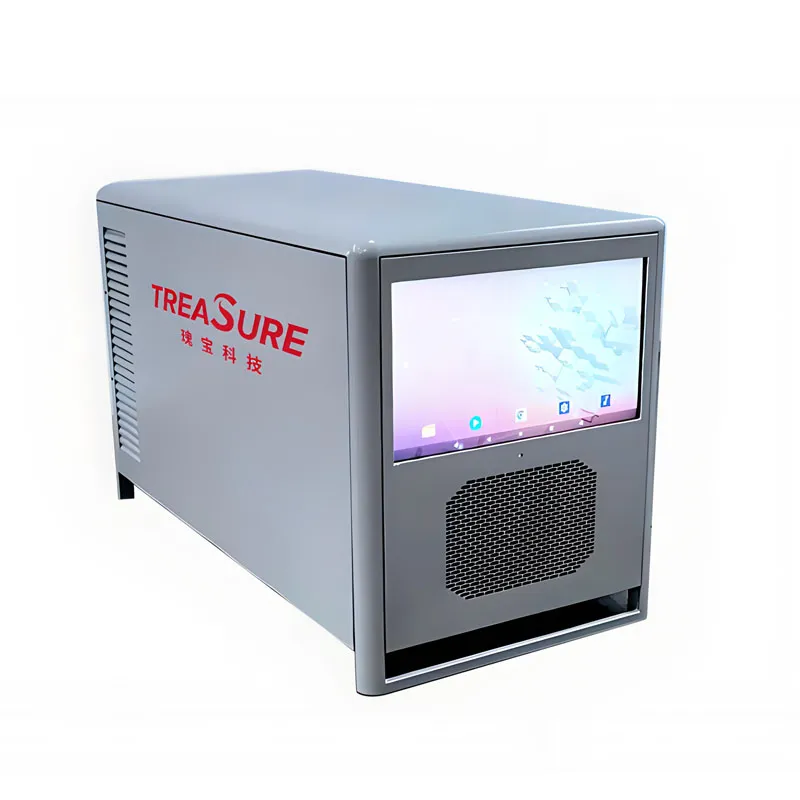
Da TREASURE Vehicle-Mounted Emergency Power Supply line covers three disclosed configurations — 20 kWh, 40 kWh, and 150 kWh — built for roadside and depot charging where no fixed charger exists. The 150 kWh version delivers up to 80 kW at 200–1000 V output. Commercial availability across the full range has not been confirmed by TREASURE.
What “Vehicle-Mounted Emergency Power Supply” Means at TREASURE
This is a separate line from TREASURE’s Mobile EV Charging Robot Series. Both are chassis-mounted battery systems that drive to a stranded or underserved vehicle rather than requiring the vehicle to reach a fixed charger, but the emergency power supply line is positioned around roadside response and short-notice backup power rather than scheduled depot rotation. The two lines share connector logic (CCS, GB/T) and general protection functions, but they are documented on separate pages with different disclosed capacity sets — a distinction that matters when comparing datasheets across TREASURE’s site.
Capacity and Power Specifications
TREASURE’s website currently publishes three capacity points for this product line, but not all of them carry a full spec sheet.
| Configuration |
Disclosed Capacity |
Potência de carregamento |
Tensão de saída |
Connectors |
What’s Confirmed |
| Standard tier 1 |
20 kWh |
Not disclosed |
Not disclosed |
CCS, GB/T |
Listed on the category page as a standard option |
| Standard tier 2 |
40 kWh |
Not disclosed |
Not disclosed |
CCS, GB/T |
Described as supporting simultaneous charging of multiple vehicles |
| Dedicated product page |
150 kWh |
Up to 80 kW |
200–1000 V |
CCS, GB/T, project-configured |
Only tier with a published power and voltage rating |
The 150 kWh unit is the only configuration with a complete public datasheet. The 20 kWh and 40 kWh entries currently exist as capacity labels without corresponding power or voltage figures.
The Multi-Vehicle Charging Claim on the 40 kWh Unit
TREASURE’s site states that the 40 kWh configuration supports simultaneous charging of multiple vehicles. What isn’t specified: the number of simultaneous connections, whether output is split evenly or allocated dynamically, or how total available power is divided when more than one vehicle is connected at once. For a 40 kWh unit, splitting output across multiple vehicles means each vehicle receives a fraction of whatever the base power rating is — and that base rating itself isn’t published for this tier. Buyers planning multi-vehicle roadside response should request the port count and power-allocation logic directly rather than assuming even splits.
Protection and Connectors
Across the disclosed configurations, TREASURE lists overcharge, overtemperature, and short-circuit protection, plus an integrated HMI and optional remote monitoring. Connector options are CCS and GB/T, consistent with TREASURE’s other EV charging products, with project-configured alternatives available on request.
One gap worth flagging directly: no ingress-protection (IP) rating is published for this product line specifically. TREASURE’s GB-BMS series and its 233 kWh energy storage cabinet both carry disclosed IP ratings (IP67 and IP67/IP54 respectively depending on configuration), but that rating doesn’t transfer to the vehicle-mounted emergency power line without its own test data. For roadside deployment — where equipment is exposed to weather, road spray, and dust in ways a depot-based unit isn’t — IP rating is one of the first things to request from TREASURE before finalizing a spec.
For general context on how CCS connectors are structured and why interoperability matters for equipment like this, CharIN’s documentation on the Combined Charging System covers the underlying architecture.
Where This Fits for Charging Operators
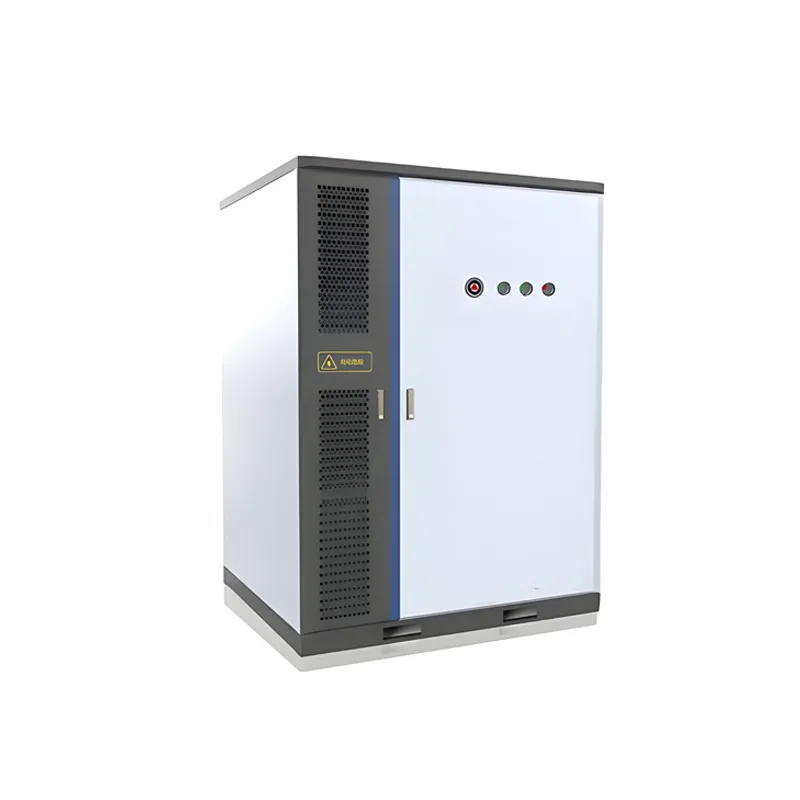
For EV charging service providers and operators, the practical use cases for this line split roughly into two categories:
- Scheduled backup deployment — pre-positioning a unit at a site during known high-demand windows or planned maintenance on fixed infrastructure
- Reactive roadside response — dispatching to a stranded vehicle or an unplanned outage at a fixed charging location
The 150 kWh unit, with its higher power ceiling, fits scheduled backup roles better than pure roadside emergency response, where a smaller and more maneuverable 20 or 40 kWh unit may be easier to dispatch quickly. Compared to the general roadside-charging product pages currently ranking for this topic — which mostly describe emergency EV power in broad terms without breaking out capacity tiers or output-voltage ranges — TREASURE’s 150 kWh page is the one configuration in this category where a buyer can compare power and voltage figures directly against a competing spec sheet.
Preços
Pricing is provided on a project-by-project basis and depends on energy capacity, charging power, voltage architecture, connector standard, battery configuration, PCS selection, enclosure design, communication protocol, software integration, logistics, commissioning, and other project requirements. Submit your target capacity tier, expected deployment scenario (scheduled backup vs. roadside response), and connector requirements to receive a project-specific quotation.
FAQ
Q: Is the 40 kWh unit the same product as the 40 kWh option shown for the Mobile EV Charging Robot Series?
A: No. They’re documented as separate product lines with separate pages. The Vehicle-Mounted Emergency Power Supply and the Mobile EV Charging Robot Series share some design logic but are not the same SKU family.
Q: Which configuration has a full spec sheet?
A: Only the 150 kWh unit currently has published power (up to 80 kW) and voltage (200–1000 V) figures. The 20 kWh and 40 kWh tiers are listed by capacity only.
Q: Does this product line carry an IP rating for outdoor or roadside use?
A: Not as published. TREASURE discloses IP ratings for other product lines (GB-BMS, C&I storage cabinets) but not for this one specifically. Confirm directly with TREASURE before specifying for weather-exposed deployment.
Q: How many vehicles can the 40 kWh unit charge at once?
A: TREASURE states it supports simultaneous multi-vehicle charging but doesn’t publish the port count or power-allocation method. Request this detail directly for deployment planning.

 Robôs Móveis de Carregamento de VE
 Fonte de Alimentação de Emergência Montada em Veículo
 Sistemas de Armazenamento de Energia
 Catálogo de Carregadores DC de VE
 Equipamento de Carregamento V2V DC