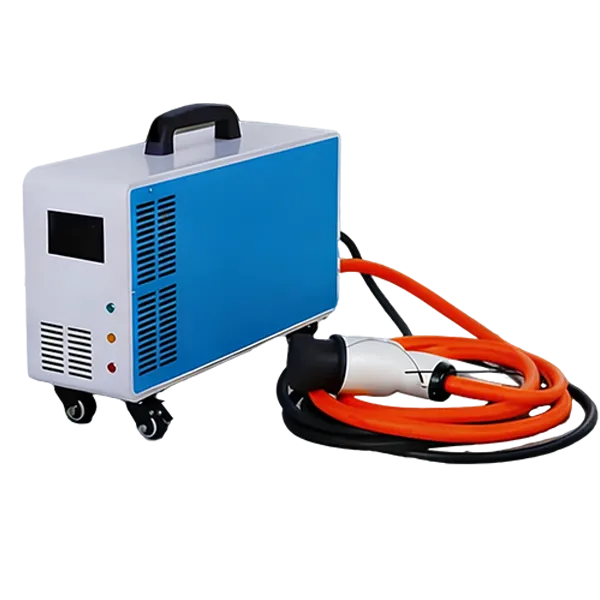
TREASURE lists three portable DC EV chargers: 6.6 kW (265 V maximum output), 7 kW (750 V) and 20 kW (1000 V). The main choice is output voltage and power: the 20 kW model is the only one rated for 1000 V, and all three share an IP44 enclosure rating.
The three models side by side
| Ürün |
6.6KW265V |
7KW750V |
20KW1000V |
| Nominal güç |
6.6 kW |
7 kW |
20 kW |
| Maximum output voltage (from model name) |
265 V |
750 V |
1000 V |
| Input voltage range* |
90–265 V |
90–280 V |
265–475 V |
| Protection rating |
IP44 |
IP44 |
IP44 |
| Structure |
Portable |
Portable |
Portable |
| Connector standard |
Not specified |
Not specified |
Not specified |
| Dimensions and weight |
Not disclosed |
Not disclosed |
|
Input ranges are matched to models in the order TREASURE lists them. Confirm the pairing against the datasheet before you specify a unit.

What actually separates the 20 kW model
The power gap is the obvious part: 20 kW is roughly three times the 6.6 kW and 7 kW ratings. As plain arithmetic, adding 20 kWh to a vehicle takes about 3 hours at a nominal 7 kW and about 1 hour at a nominal 20 kW. Real sessions run longer, because conversion losses and the vehicle’s own acceptance limit both reduce what the charger can deliver.
The less obvious part is the supply side. The 20 kW unit’s input range of 265–475 V sits well above the 90–265 V and 90–280 V windows of the other two. A site that can host a 6.6 kW unit on ordinary low-voltage supply may not be able to host the 20 kW unit without electrical work. Ask TREASURE whether the 20 kW model needs a three-phase connection.
6.6 kW or 7 kW? The power is nearly equal, the voltage ceiling is not
The two lower-power models differ by 0.4 kW, about 6%. That gap is negligible for dwell-time planning. The difference that matters is the output ceiling: 265 V against 750 V.
A DC charger cannot charge a pack whose operating voltage is above the charger’s maximum output. If your fleet includes vehicles with higher-voltage packs, the 265 V model is out regardless of its price or convenience. The reverse is a common misreading, too: a higher voltage ceiling does not mean faster charging. The 7KW750V unit still delivers 7 kW.
The lower end of each output window is not disclosed, so check it as well as the ceiling.

Spec gaps to close before you specify
Operators buying for a fleet or a public site need more than the published table gives. Items absent from the material reviewed:
- Connector standard per model (CCS, CHAdeMO and GB/T are listed for HAZİNE‘s wider EV DC charger portfolio, not assigned to these three models)
- Output current, efficiency and cable length
- Dimensions and weight, which matter for a unit sold on being portable
- Whether the units communicate with a charging-management platform. The Open Charge Alliance’s OCPP is the common protocol for that link, and OCPP 1.6 is widely implemented, but support for these specific models is not stated.
- Certificate names, numbers, issuing bodies and validity periods.
None of these should be assumed. Request the current datasheet and certificate files for the exact model you intend to buy.
Portable versus fixed: what you trade
Compared with typical fixed DC fast chargers, a portable unit gives up power. TREASURE’s fixed and V2G-ready DC charger portfolio lists up to 150 kW, while the portable series tops out at 20 kW. In return, the portable structure lets one unit serve different bays or sites, and the lower power ratings place a smaller demand on the local supply.
Choosing between the three: a five-step check
- List the pack voltages of the vehicles you need to charge and discard any model whose maximum output is below them.
- For each vehicle type, divide the energy you want to add per stop by the rated power to get a best-case session time, then add margin for losses.
- Compare each site’s available supply with the model’s input range, including phase requirements.
- Confirm the connector standard and communication protocol for your market and back-office platform.
- Request certificate files and the IP test basis for the specific model before it goes into a tender.
How pricing works
Pricing is provided on a project-by-project basis and depends on energy capacity, charging power, voltage architecture, connector standard, battery configuration, PCS selection, enclosure design, communication protocol, software integration, logistics, commissioning, and other project requirements.
SSS
Which TREASURE portable DC EV charger has the highest power?
The 20KW1000V model, rated at 20 kW with a maximum output voltage of 1000 V.
Does the 750 V rating on the 7 kW model make it charge faster than the 6.6 kW model?
No. The 750 V figure is the maximum output voltage, not a speed measure. The 7 kW and 6.6 kW models differ by 0.4 kW in rated power.
Are these chargers certified?
Certificate names, numbers and issuers are not publicly verifiable from the published material. Request the original certificate files for your specific model before specifying it.
How much does a portable DC EV charger from TREASURE cost?
Pricing is quoted per project. See the pricing section above for the factors involved.

 Mobil EV Şarj Robotları
 Araç Üzeri Acil Güç Kaynağı
 Enerji Depolama Sistemleri
 EV DC Şarj Cihazları Kataloğu
 Araçtan Araca DC Şarj Ekipmanı