TREASURE Technical Team | Corporate Technical Author — Battery Energy Storage and EV Charging Systems | Published August 2026
A V2V (vehicle-to-vehicle) DC charger transfers stored energy from one EV’s battery directly into another’s, without routing through fixed grid infrastructure. TREASURE’s V2V DC Charger Series covers three power tiers — 20 kW, 40 kW, and 60 kW — in either mobile or stationary form, built around bidirectional transfer configured per deployment.
Why Power Tier Is the First Decision, Not the Last
Most V2V content online right now reads like a patent abstract or a general primer on bidirectional charging concepts — useful for understanding the technology, useless for actually specifying equipment. What’s missing is the practical question an operator has to answer first: which power tier fits the use case in front of them. A 20 kW unit and a 60 kW unit solve different problems, and treating “V2V charger” as a single undifferentiated category skips the decision that actually determines cost, deployment footprint, and session time.
Spec Comparison: 20kW vs 40kW vs 60kW
| Spec |
20 kW |
40 kW |
60 kW |
| Potencia nominal |
20 kW |
40 kW |
60 kW |
| Configuration |
Mobile or stationary |
Mobile or stationary |
Mobile or stationary |
| Conectores |
CCS, CHAdeMO, GB/T, or project-configured |
CCS, CHAdeMO, GB/T, or project-configured |
CCS, CHAdeMO, GB/T, or project-configured |
| BMS communication |
Integrated |
Integrated |
Integrated |
| Local control |
HMI |
HMI |
HMI |
| Monitorización remota |
Optional |
Optional |
Optional |
| Bidirectional support |
Per selected configuration |
Per selected configuration |
Per selected configuration |
A note on the 20 kW model specifically: TREASURE’s own product-detail table labels this figure “Battery Capacity” in one place, while the page title and category listing identify it as a charging-power rating everywhere else. Until TREASURE issues a corrected datasheet, this should be read as a 20 kW power rating, not a capacity spec — the two aren’t interchangeable, and conflating them would misrepresent what the unit can actually deliver in a session.

What Actually Changes Between Tiers
Session length is the most direct trade-off. At a given transfer power, a larger energy exchange takes proportionally longer — a rescue or top-up transfer aimed at getting a stranded vehicle to the next charging point doesn’t need the same throughput as a planned relay-charging operation moving meaningful energy between vehicles on a schedule. The 20 kW tier suits the former; 40–60 kW suits the latter.
Mobile versus stationary is a separate axis entirely, not tied to power tier. A stationary V2V unit sits at a fixed point and vehicles come to it — closer in practice to a conventional charging bay. A mobile configuration goes to the vehicle, which matters for fleet operators handling breakdowns across a service area rather than at one lot. Any of the three power tiers can be built in either form; the choice depends on whether the demand pattern is centralized or dispersed.
Common Misconception: V2V Isn’t Automatically Bidirectional
A frequent assumption is that any V2V-labeled charger transfers power in both directions by default. That’s not how TREASURE’s series works — bidirectional support is configured per deployment, not a blanket feature of the product line. An operator specifying a unit for a one-way rescue-transfer use case and one specifying a unit for two-way relay operations between fleet vehicles are ordering functionally different configurations, even at the same power tier. This distinction should be confirmed at the quotation stage, not assumed from the “V2V” label alone.
Connector and Protocol Fit
The connector options — CCS, CHAdeMO, or GB/T — follow the same interoperability groundwork used across the broader DC fast-charging market rather than a V2V-specific standard. CharIN’s Combined Charging System work covers the CCS interoperability layer these units rely on, and the CHAdeMO Association’s specifications apply where that connector is selected. Neither standards body certifies V2V-specific performance; they govern the connector and communication layer a V2V transfer runs over.
Pricing
Pricing for the V2V DC Charger Series is provided on a project-by-project basis and depends on energy capacity, charging power, voltage architecture, connector standard, battery configuration, BMS/EMS requirements, communication protocol, and OEM/ODM requirements. Submit fleet size, use case (rescue transfer vs. relay operation), and target power tier for a technical proposal.

PREGUNTAS FRECUENTES
Q: What’s the difference between a 20kW and a 60kW V2V charger in practice?
A: Power tier determines transfer speed for a given energy exchange. 20 kW suits shorter, smaller top-up transfers; 60 kW handles larger energy exchanges in less time. Neither figure tells you battery capacity — that’s a separate spec.
Q: Is bidirectional transfer included in every V2V charger TREASURE sells?
A: No. Bidirectional support is configured per project and per deployment, not automatically included at every power tier.
Q: Can the same unit be used for both rescue charging and planned relay charging?
A: Depends on the configuration ordered. Power tier and bidirectional setup should be specified based on which use case is primary before ordering.
Q: What connector types are available?
A: CCS, CHAdeMO, and GB/T are standard, with additional project-configured interfaces available depending on target market.

 Robots móviles de carga de vehículos eléctricos
 Fuente de alimentación de emergencia montada en el vehículo
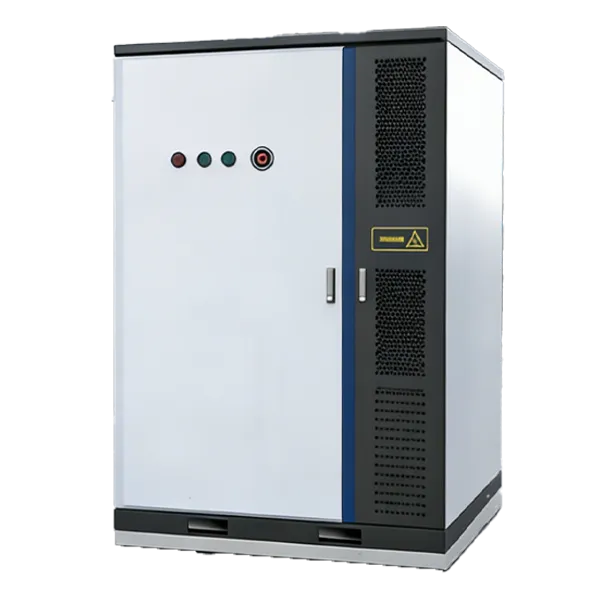 Sistemas de almacenamiento de energía
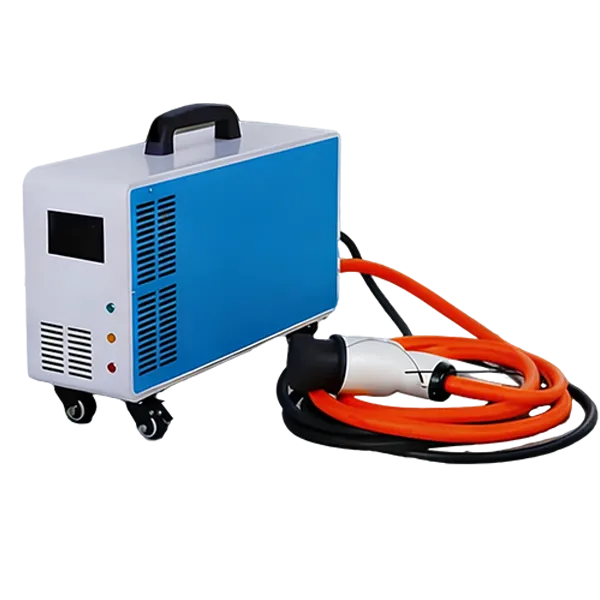 Catálogo de cargadores de CC para VE
 Equipo de carga de CC V2V