TREASURE Technical Team | Corporate Technical Author — Battery Energy Storage and EV Charging Systems | Updated August 2026
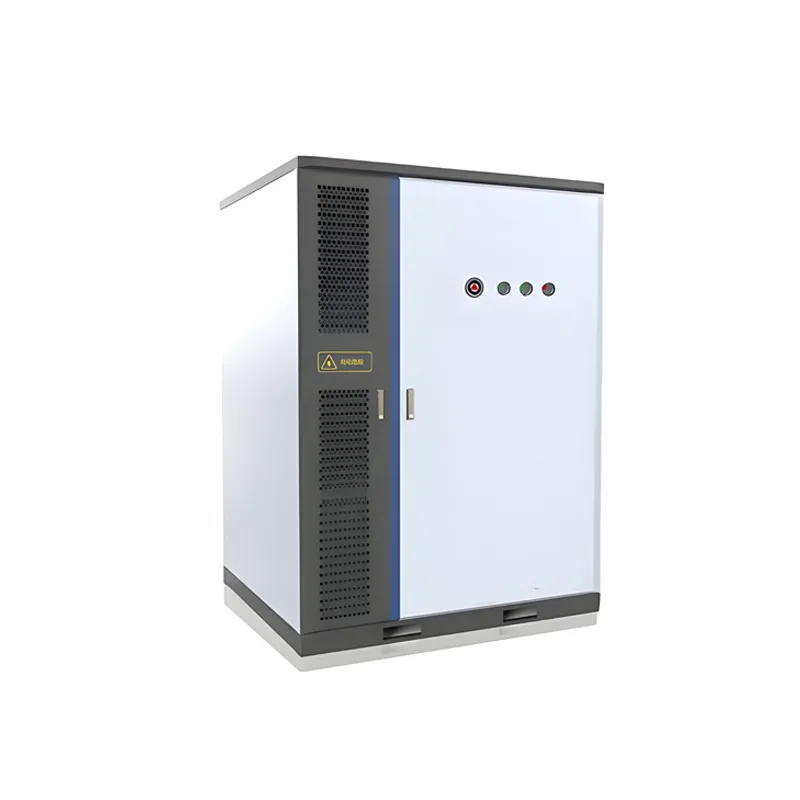
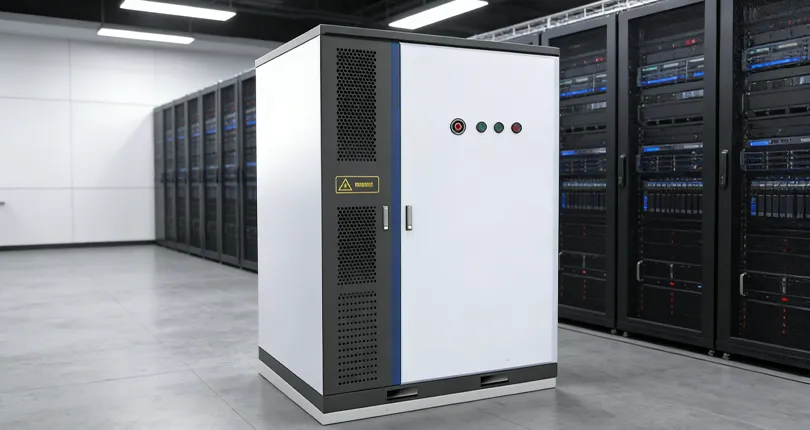
TREASURE’s Commercial and Industrial Integrated Energy Storage Cabinet Series ships in two disclosed configurations: 100 kW / 233 kWh and 135 kW / 261 kWh. Both use lithium iron phosphate cells and support grid-connected, off-grid, or solar-plus-storage operation, scalable to multi-MW projects.
The Two Disclosed Cabinet Configurations
Before getting into how solar-plus-storage sizing works, it helps to start with what’s actually on the spec sheet — not a generic capacity range, but the two configurations TREASURE publishes.
| Spec |
Cabinet A |
Cabinet B |
| Potenza nominale |
100 kW |
135 kW |
| Capacità energetica |
233 kWh |
261 kWh |
| Composizione chimica della batteria |
Lithium iron phosphate |
Lithium iron phosphate |
| Protection rating |
IP67 |
Not specified on the disclosed page |
| Control/monitoring |
Local HMI, remote monitoring |
Local HMI, remote monitoring |
| Communication |
Modbus TCP, Modbus RTU, CAN, project-specific IEC |
Modbus TCP, Modbus RTU, CAN, project-specific IEC |
| Configuration modes |
Grid-connected, off-grid, solar-plus-storage, microgrid |
Grid-connected, off-grid, solar-plus-storage, microgrid |
| Scalabilità |
Multi-cabinet, multi-MW / multi-MWh |
Multi-cabinet, multi-MW / multi-MWh |
One detail worth flagging directly: the IP67 rating is disclosed specifically for the 233 kWh cabinet’s page. Per IEC 60529, an enclosure rating applies to the tested unit, so it shouldn’t be assumed to carry over automatically to the 261 kWh cabinet without a separate confirmation.
How Solar-Plus-Storage Sizing Actually Works Here
A cabinet’s rated power and energy capacity are two separate decisions, and conflating them is where a lot of first-pass sizing goes wrong.
- Start with peak load, not average load. The 100 kW or 135 kW rating determines how much instantaneous power the cabinet can deliver — this needs to cover your site’s peak demand during a discharge event, not its average draw.
- Size energy capacity against discharge duration, not just load. 233 kWh at 100 kW gives roughly 2.3 hours of full-power discharge; 261 kWh at 135 kW gives just under 2 hours. If your site needs longer backup or a longer peak-shaving window, multiple cabinets — not a single unit — are the disclosed path to scale.
- Confirm PV interconnection point before finalizing PCS selection. Solar-plus-storage configuration determines whether the cabinet’s PCS handles DC-coupled or AC-coupled PV input; this is a project-specific decision, not a fixed spec on the current disclosed pages.
- Map communication protocol to existing SCADA. Modbus TCP and RTU cover most industrial SCADA integrations; CAN is typically used for battery-side communication, and project-specific IEC protocols come into play for utility-facing or grid-code requirements.
The edge case worth knowing about here: multi-cabinet scaling changes the sizing math. Two 135 kW cabinets don’t simply double to 270 kW of usable dispatch if the site’s PCS architecture or transformer sizing wasn’t planned for parallel operation from the start — that coordination has to happen at the project design stage, not retrofitted afterward.
Grid-Connected vs. Off-Grid: What Changes at the Cabinet Level
The C&I cabinet series supports both modes, but the operating requirements aren’t identical.
| Factor |
Grid-connected |
Off-grid |
| Reference for frequency/voltage |
Provided by the grid |
Must be established by the storage system itself |
| Typical use case |
Peak shaving, demand-charge reduction, solar self-consumption |
Islanded operation, remote sites, backup power |
| EMS/SCADA role |
Optimizes against tariff or utility signal |
Coordinates battery, PV, and load directly to hold system stability |
| PCS demands |
Reactive to grid conditions |
Must actively regulate output |
Compared with a bundled hybrid-inverter-plus-battery pairing at a fixed kW/kWh point — the kind of setup some vendors present as a single locked configuration — TREASURE discloses its cabinet ratings independently of a specific inverter brand pairing, leaving PCS and inverter selection as a project-level decision rather than a factory-fixed bundle.
A Common Misconception: “More Solar Means Less Storage Needed”
This comes up often enough on project calls that it’s worth addressing directly. Adding more PV capacity doesn’t reduce how much storage a site needs — it changes when storage gets used. A factory with a large PV array still needs enough kWh capacity to cover the gap between solar generation hours and its actual peak-demand window, which for many industrial sites falls in the evening or during a shift change that doesn’t align with peak sun. Oversizing PV without matching storage duration just means more curtailed or exported energy during midday, not a smaller battery requirement.
What’s Not Yet Confirmed
A few things worth stating plainly rather than glossing over. The C&I cabinet series does not have a publicly verifiable third-party certification (UL, IEC 62933, CE, or similar) at this time — any certification claim needs an original certificate file before it goes into a technical submission. Warranty terms, cycle-life figures under specific solar-plus-storage duty cycles, and exact PCS model pairings are also not published on the currently disclosed pages and should be confirmed on a per-project basis.
Prezzi
Pricing is provided on a project-by-project basis and depends on energy capacity, charging power, voltage architecture, connector standard, battery configuration, PCS selection, enclosure design, communication protocol, software integration, logistics, commissioning, and other project requirements. No fixed price range is published for the C&I cabinet series.
FAQ
Q: What are the two disclosed C&I cabinet configurations?
A: 100 kW / 233 kWh and 135 kW / 261 kWh, both using lithium iron phosphate cells.
Q: Can these cabinets run off-grid?
A: Yes — the disclosed configuration modes include grid-connected, off-grid, solar-plus-storage, and microgrid operation.
Q: Does the IP67 rating apply to both cabinet models?
A: It’s disclosed specifically for the 233 kWh cabinet’s page. The 261 kWh cabinet’s protection rating isn’t specified on the currently disclosed materials, so it shouldn’t be assumed to match.
Q: Do multiple cabinets scale linearly for larger sites?
A: They’re designed to scale to multi-MW/multi-MWh projects, but PCS architecture and transformer sizing need to be planned for parallel operation from the start rather than added on later.

 Robot di ricarica mobile per veicoli elettrici
 Alimentazione di emergenza montata sul veicolo
 Sistemi di accumulo di energia
 Catalogo dei caricatori EV DC
 Apparecchiature di ricarica V2V in corrente continua