TREASURE Technical Team | Corporate Technical Author — Battery Energy Storage and EV Charging Systems | Published September 14, 2026
A 120kW DC fast charger can come from three different equipment types: a grid-connected fixed pile, a diesel-generator-powered mobile truck, or a battery-storage mobile unit that charges from the grid off-peak and discharges on demand. The right choice depends on site power availability, not just output rating.
Three Ways to Get 120kW On Site
Most buyer research treats “120kW charger” as a single category, but the power electronics that produce that output differ enough to change the entire procurement decision.
Fixed 120kW chargers pull continuously from a permanent grid connection. Output is stable and duty cycle is effectively unlimited, but you need sufficient grid capacity at the point of installation and the civil works — trenching, conduit, foundation — to match.
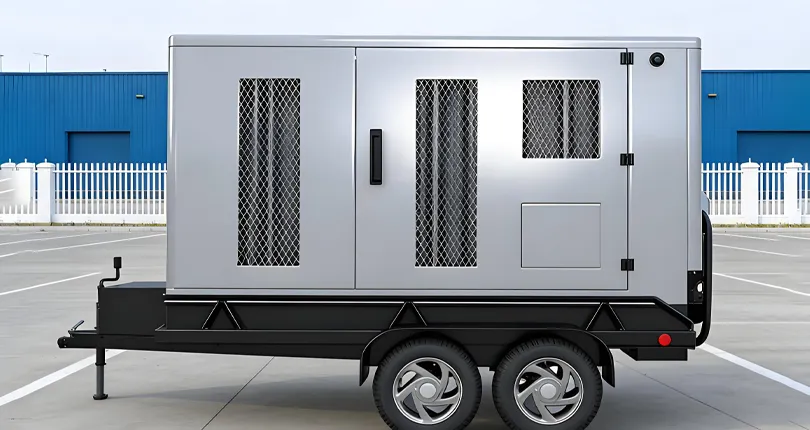
Diesel-generator mobile chargers solve the “no grid capacity” problem by bringing their own power source. They’re genuinely portable and can run continuously as long as fuel supply holds, but they carry fuel logistics, emissions, and noise considerations that a battery-based system doesn’t.
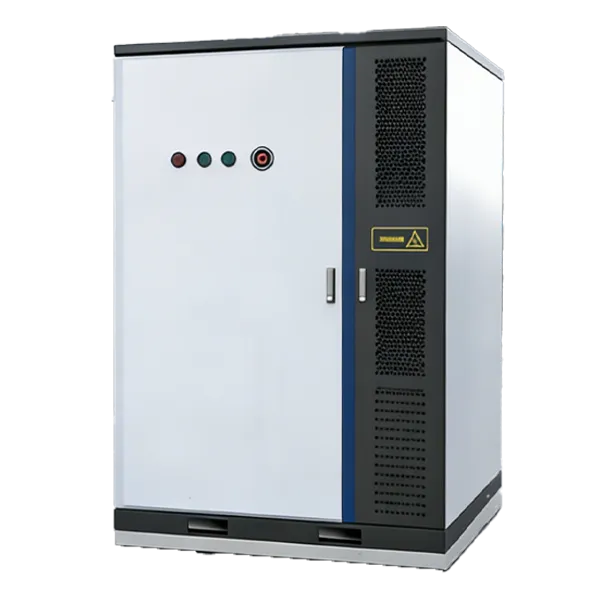
Battery-storage mobile chargers — the category TREASURE’s Mobile EV Charging Robot Series belongs to — store energy from a grid connection during off-peak hours, then discharge at up to 120kW without any live connection at the point of use. Output is limited by onboard capacity rather than fuel supply or grid draw, which is the trade-off that matters most when comparing this option against the other two.
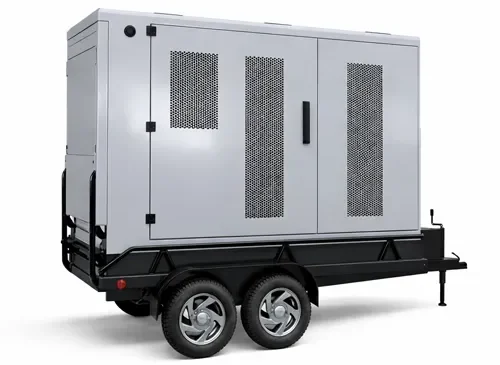
Comparing the Three at 120kW
| Dimension |
Fixed 120kW Pile |
Diesel-Generator Mobile |
Battery-Storage Mobile (150kWh/120kW config) |
| Power source at point of use |
Continuous grid |
Onboard fuel |
Onboard battery, charged off-peak |
| Duty cycle at full 120kW |
Unlimited |
Limited by fuel supply |
Roughly 1 hour before recharge needed |
| Site power requirement |
High-capacity grid connection required |
None at deployment site |
None at deployment site |
| Civil works |
Trenching, conduit, foundation |
None |
None |
| Relocatable |
No |
Sim |
Sim |
| On-site emissions |
None |
Combustion exhaust, fuel handling |
None |
| Deployment lead time |
Weeks to months (permitting-dependent) |
Days |
Days |
The duty-cycle row is the one operators tend to underweight. A battery-storage unit configured at 150 kWh capacity and 120 kW output runs for roughly an hour of sustained full-power discharge before it needs its own recharge window — after accounting for round-trip losses, less than that in practice. That’s not a limitation against a diesel truck’s continuous runtime; it’s a different operating model, built around scheduled peak coverage rather than all-day service.
What “120kW” Means on TREASURE’s Mobile Robot Spec Sheet
The 120kW figure sits within Da TREASURE Mobile EV Charging Robot Series as one of four disclosed power tiers (40/60/80/120kW), paired with a dedicated 150kWh capacity configuration on the manufacturer’s product page.
| Parâmetro |
Disclosed Value (150kWh/120kW configuration) |
| Capacidade de energia |
150 kWh |
| Rated charging power |
120 kW |
| Battery cell spec |
314 Ah |
| Operating voltage range |
525.6–700.8 V |
| Approximate unit weight |
1.45 t |
| Connector options |
CCS, GB/T, project-configured interfaces |
| Control |
Integrated BMS, HMI, optional remote monitoring |
CCS remains the connector standard most fixed and mobile 120kW chargers converge on for this power class — CharIN’s Combined Charging System specification is the reference architecture behind that interoperability, regardless of whether the charger is stationary or battery-backed.
Where Each Option Actually Wins
A fixed 120kW pile wins on sites with abundant grid capacity and predictable, high daily traffic — a highway corridor stop, a large fleet depot with an existing utility upgrade already in place. Sinking capital into trenching only pays off when the charger runs near capacity most of the day.
A diesel-generator mobile unit wins where continuous runtime matters more than emissions or fuel logistics — disaster response, construction sites with no timeline for grid access, locations where a battery unit’s hour-plus discharge window genuinely isn’t enough.
A battery-storage mobile robot wins the middle case: sites with peak demand windows short enough that an hour or two of 120kW output covers the surge, where trenching isn’t practical or worth the capital, and where zero on-site emissions matters for the location — a covered forecourt, an indoor depot bay, a site near residential development.
Pricing Note
None of the three charger types compared here have publicly disclosed flat pricing, TREASURE’s mobile robot included. Pricing is provided on a project-by-project basis and depends on energy capacity, charging power, voltage architecture, connector standard, battery configuration, PCS selection, enclosure design, communication protocol, software integration, logistics, commissioning, and other project requirements.
FAQ
Q: Can a 150kWh battery-storage mobile charger really sustain 120kW output?
A: Yes, but only for a limited duration — roughly an hour of sustained full-power discharge before the unit needs its own recharge cycle, less in practice once round-trip losses are factored in. It’s not designed for continuous all-day 120kW service the way a grid-connected fixed charger is.
Q: Is a diesel-generator mobile charger more reliable than a battery-storage unit?
A: It depends on the metric. A diesel unit can run continuously as long as fuel supply holds, which battery-storage units can’t match at full output. A battery unit has zero on-site emissions and no fuel logistics, which a diesel unit can’t match. Neither is universally “more reliable” — the right choice depends on runtime needs versus emissions and logistics constraints.
Q: Does a 120kW mobile charger need a grid connection at all?
A: A battery-storage mobile charger needs a grid connection to recharge itself, but not at the point where it delivers power to a vehicle — that’s the core difference from a fixed pile. A diesel-generator mobile unit needs no grid connection at any point, relying on fuel instead.
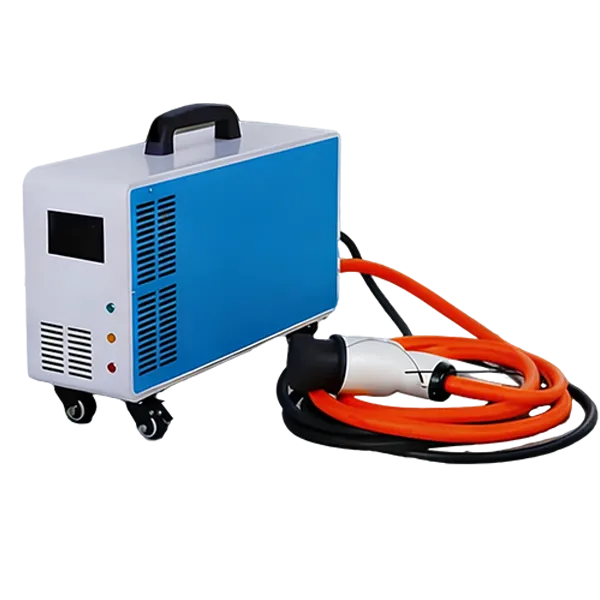
Q: What connector does a 120kW mobile DC charger use?
A: Da TREASURE 150kWh/120kW mobile robot configuration supports CCS and GB/T as standard, with additional project-configured interfaces available depending on target market and fleet vehicle mix.

 Robôs Móveis de Carregamento de VE
 Fonte de Alimentação de Emergência Montada em Veículo
 Sistemas de Armazenamento de Energia
 Catálogo de Carregadores DC de VE
 Equipamento de Carregamento V2V DC