An energy management system decides when a battery charges, discharges, or idles. It reads grid status, load demand, and battery state data, then sends dispatch commands to inverters and PCS units over Modbus or CAN. It does not manage individual cell voltages — that's a separate layer entirely.
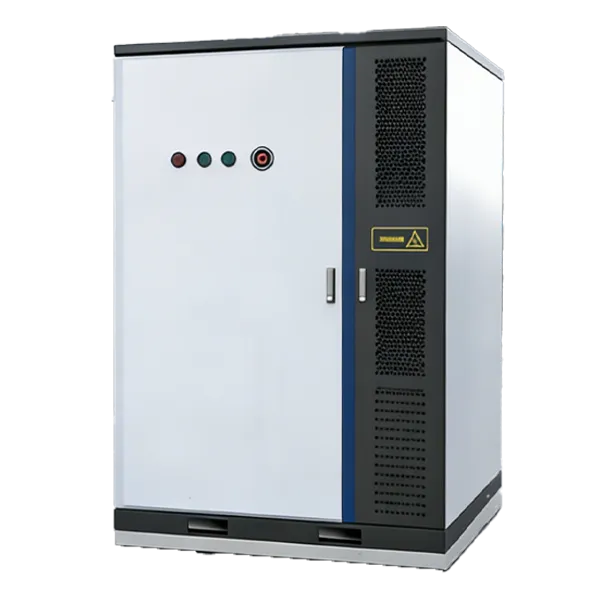
TREASURE's Commercial and Industrial Integrated Energy Storage Cabinet Series ships in two disclosed configurations: 100 kW / 233 kWh and 135 kW / 261 kWh. Both use lithium iron phosphate cells and support grid-connected, off-grid, or solar-plus-storage operation, scalable to multi-MW projects.
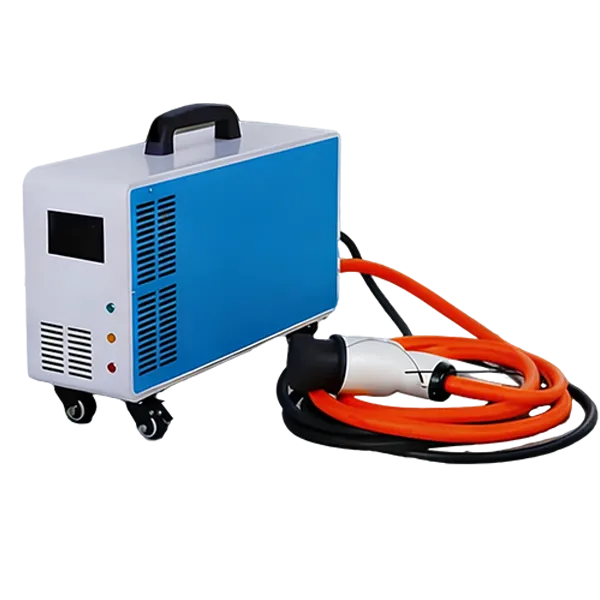
A V2V (vehicle-to-vehicle) DC charger transfers stored energy from one EV's battery directly into another's, without routing through fixed grid infrastructure. TREASURE's V2V DC Charger Series covers three power tiers — 20 kW, 40 kW, and 60 kW — in either mobile or stationary form, built around bidirectional transfer configured per deployment.
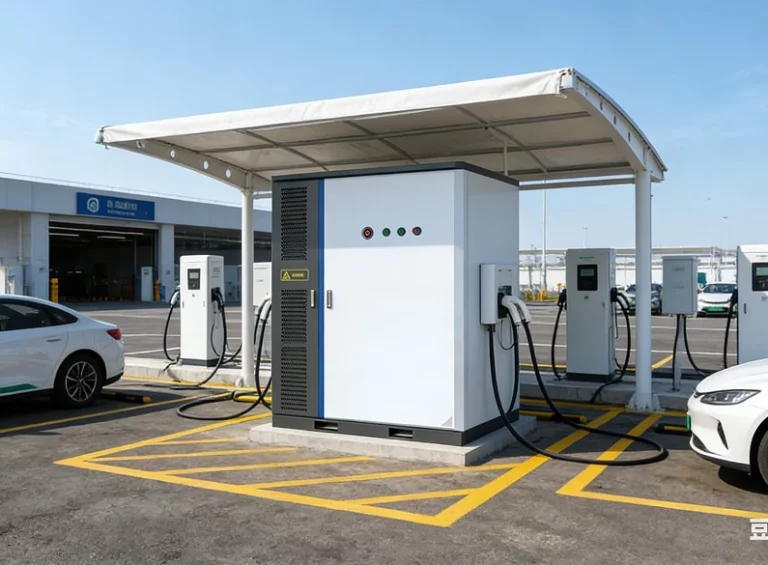
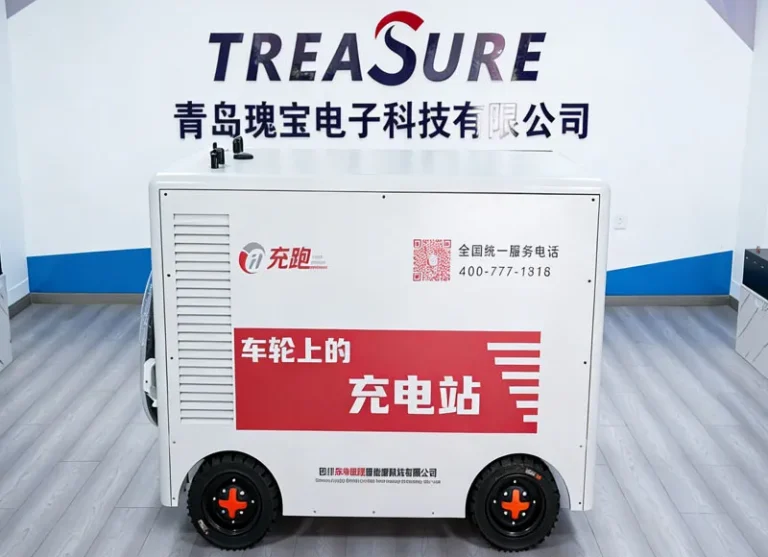
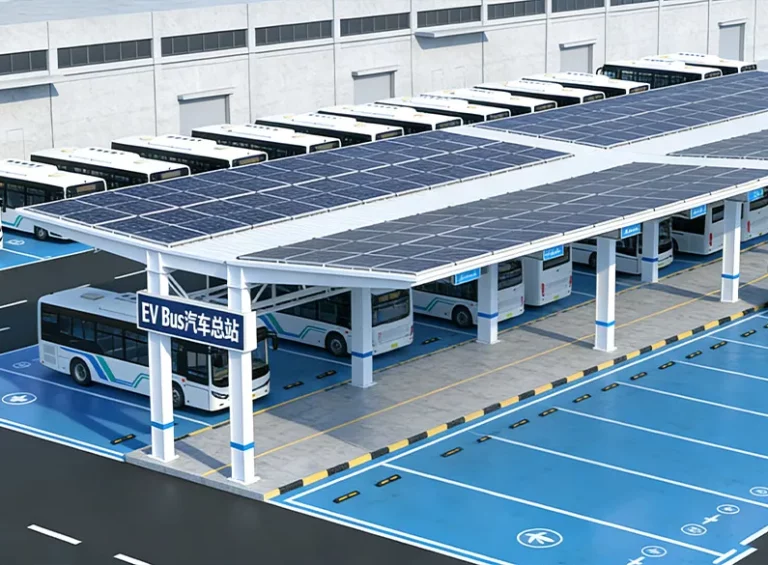
A mobile EV charging solution is a battery-buffered charging unit that stores energy during off-peak hours and discharges it to vehicles wherever they're parked, without a dedicated grid connection at each stall. For depot operators facing space or capacity limits, it functions as charging infrastructure that relocates instead of one that gets poured into concrete.
Meta Description: A spec-level comparison of 150kWh and 200kWh mobile EV charging robot configurations — capacity, weight, voltage range, and the power-rating gaps buyers should confirm before ordering.
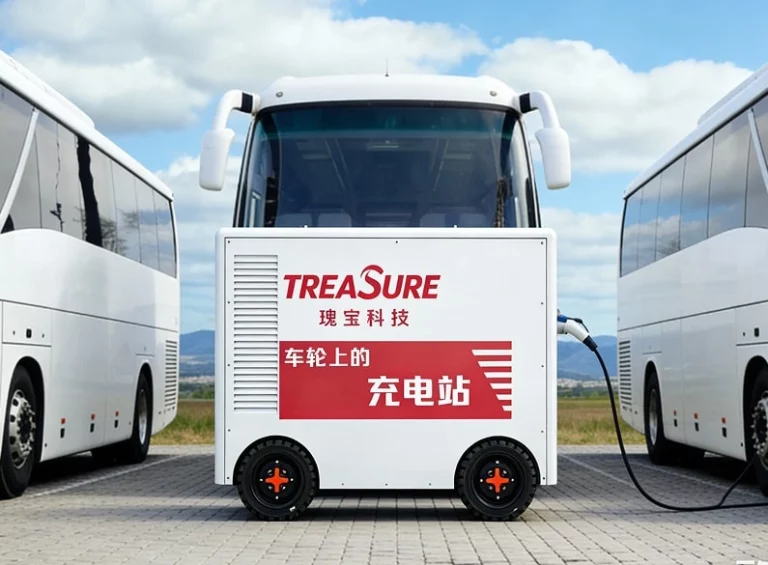
A mobile EV charging robot is a battery-integrated unit on a mobile chassis that drives or is towed to a parked vehicle and delivers DC power on demand. Capacity typically ranges 55–200 kWh, with charging power from 40–120 kW, removing the need to build a fixed charging bay at every parking stall.