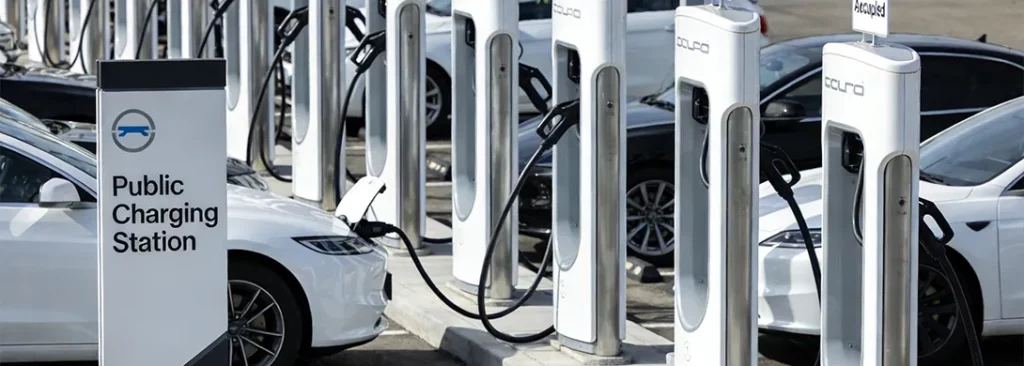
A weak charging plan can leave drivers waiting, vehicles idle, and electrical costs rising. As more fleets move to EVs, fixed charge stations alone may not meet changing demand. The solution is a planned mix of home, workplace, commercial, fast, mobile, and battery-supported charging.
Bir Elektrikli araç şarj istasyonu supplies controlled electrical power to an electric vehicle through compatible charging equipment and a connector. Level 2 systems suit longer parking periods, while DC fast chargers support rapid charging. The right setup depends on vehicle use, dwell time, grid capacity, charging speed, connector type, and future expansion.
Article Outline
1. What is an EV charging station?
2. How do Level 2 and DC fast charging differ?
3. What controls EV charging speed?
4. Which connector types should drivers and buyers understand?
5. How can EV drivers find fast public charge stations?
6. How should businesses plan commercial EV charging?
7. When is a mobile EV charging solution the better choice?
8. How can battery storage strengthen EV charging infrastructure?
9. What makes an EV charging network reliable?
10. What should buyers ask an EV charging equipment manufacturer?
11. Frequently asked questions
What Is an EV Charging Station and How Does Electric Vehicle Charging Work?
An EV charging station transfers electricity from a power source to a vehicle battery. The station may draw energy from the grid, solar panels, a battery storage system, or a combination of these sources. It controls the flow of power, communicates with the vehicle, and stops or adjusts the session when required.
The charging process normally follows five simple steps:
1. The driver parks near the station.
2. The correct connector is inserted into the vehicle’s charging port.
3. The charging system checks communication and safety conditions.
4. Power begins flowing at a level accepted by the vehicle.
5. The session slows or stops when the target state of charge is reached.
The term EVSE, or electric vehicle supply equipment, is often used for the hardware that safely supplies power to the vehicle. In AC charging, the vehicle converts AC power into DC power through its onboard charger. During direct current fast charging, the station supplies DC power more directly to the vehicle battery.
This difference matters. A charging unit may have a high nameplate rating, but the EV decides how much power it can safely accept. Battery temperature, vehicle design, charge level, and software can all affect the final speed.
The U.S. Department of Energy explains that public electric vehicle charging generally uses Level 2 equipment or DC fast charging. Level 2 is common where vehicles remain parked for longer periods, while DC charging is often installed at urban hubs and along major highways.
A charger does not force energy into a vehicle. The station and vehicle work together throughout the session.
For a residence, a simple home unit may be enough. A workplace may need several shared ports. A logistics depot may require high-power equipment, load control, battery storage, and mobile backup. The best design always begins with how the vehicles operate.
How Do Level 2 and DC Fast Charging Stations Differ?
The main difference is how quickly the equipment delivers energy and where the power conversion takes place.
Level 2 equipment normally uses 208V or 240V AC service. It is common at homes, offices, hotels, apartment buildings, shopping areas, and fleet depots where vehicles stay parked for several hours. According to the Alternative Fuels Data Center, Level 2 equipment can range from about 2.9kW to 19.2kW and may add roughly 10 to 30 miles of range per hour, depending on the vehicle and equipment.
A level 2 home charger is often suitable for overnight charging. Commercial Level 2 charging stations may serve employee vehicles, company cars, hotel guests, or longer-dwell fleet vehicles. These systems usually cost less to deploy than high-power fast chargers and place less immediate pressure on the site’s electrical connection.
DC equipment serves a different need. DC fast charging sends converted DC power to the vehicle and can add a much larger amount of range in a shorter time. The Department of Energy describes typical public DC fast charging as adding approximately 100 to more than 200 miles in 30 minutes, although actual results vary widely.
| Charging type |
Common location |
Typical parking time |
Best suited for |
| Level 1 |
Home or light workplace use |
Overnight or longer |
Low daily mileage |
| Level 2 |
Home, workplace, hotel, parking facility |
Several hours |
Passenger cars and overnight fleets |
| DC fast charging |
Highway, urban hub, depot, service area |
Short stops |
High-mileage vehicles and quick turnaround |
| Mobile DC charging |
Roadside, overflow lot, temporary site |
On demand |
Emergency, fleet backup and flexible deployment |
Fast chargers are useful, but higher power is not always better. A vehicle parked for eight hours may not need a high-power unit. In that case, several Level 2 chargers with smart load sharing may provide better value than one expensive fast charger.
The right balance depends on dwell time:
Long parking time ───────────────────────────── Short parking time
Level 1 Level 2 Medium DC High-power DC fast charging
Lower power Higher power
Home chargers solve predictable overnight needs. Fast-charging stations solve time-sensitive needs. Commercial sites often need both.
What Controls EV Charge Speed and State of Charge?
An advertised charger rating is only one part of the charging speed. The actual EV charge rate depends on the lowest limit in the complete system.
Important limits include:
- Station output power
- Vehicle maximum charging acceptance
- Vehicle battery voltage
- Battery temperature
- Cable and connector capability
- Current state of charge
- Power sharing with nearby ports
- Site utility capacity
- Battery protection software
A vehicle normally charges faster when its battery is low or in the middle of its usable range. As the battery becomes full, the vehicle reduces power to protect cell life and manage heat. This is why a session from 10% to 80% is often much faster than charging from 80% to 100%.
Cold or very hot conditions can also reduce charging speeds. Some electric cars precondition the battery before reaching a fast station. Preconditioning brings the pack closer to a suitable temperature, allowing faster charging when the vehicle arrives.
The charging curve can be shown in a simple form:
Şarj Gücü
100% | __________
80% | / \
60% | / \
40% |_____/ \____
10% 30% 60% 80% 100%
State of Charge
This chart is illustrative. Every Tesla model, Rivian, Polestar, commercial van, bus, and other new electric vehicle can have a different charging curve. The station does not control that curve alone.
A buyer should therefore avoid comparing equipment only by maximum kW. Ask these questions instead:
- Which vehicles will use the station?
- How long will they remain parked?
- How much energy must each vehicle receive?
- How many vehicles may charge together?
- What departure time must the fleet meet?
For an EV fleet, operational output matters more than a single peak number. The goal is not merely faster charging. The goal is to prepare enough vehicles for the next shift without creating unnecessary grid costs.
Which Connector Types Matter for an Electric Vehicle Charging Station?
The connector must match the vehicle, power level, and target market. Common North American connector types include J1772 for AC charging and CCS, CHAdeMO, or J3400/NACS for DC charging. The Department of Energy advises drivers to confirm which public connector is compatible with their vehicle before beginning a trip.
NACS, now standardized through SAE J3400, can support both AC and DC power transfer through one coupler design. SAE J3400 defines physical, electrical, functional, safety, and performance requirements for the coupler.
| Connector |
Typical charging use |
Market note |
| J1772 |
AC Level 1 and Level 2 |
Common on earlier North American non-Tesla vehicles |
| CCS1 |
North American DC fast charging |
Combines AC and DC connection features |
| CCS2 |
DC charging in many global markets |
Common across Europe and other regions |
| CHAdeMO |
DC fast charging |
Used by selected vehicle models |
| J3400/NACS |
AC and DC charging |
Increasingly adopted in North America |
| GB/T |
AC and DC charging |
Used in the Chinese market |
Tesla developed the connector that became known as NACS, while SAE created the J3400 industry standard. Tesla Superchargers are also opening to supported non-Tesla vehicles, although access may depend on the automaker, vehicle, station design, software, and whether an adapter is required.
That distinction is important for site hosts. Installing a particular charging port does not automatically guarantee compatibility with every vehicle. Software communication, payment access, cable reach, voltage range, and vehicle authorization must also work.
For overseas B2B projects, TREASURE configures connector standards according to the target market and confirmed vehicle requirements. We do not treat one plug as universal. During planning, we review the vehicle list, local rules, required output, communication method, and expected future fleet mix.

How Can EV Drivers Find Fast Public Charge Stations?
Drivers can find fast charge stations through vehicle navigation, network apps, mapping services, and government station databases. In the U.S., the Department of Energy’s Alternative Fuels Data Center provides an Alternative Fueling Station Locator with filters for charging level, access, status, network, and connector. The Joint Office of Energy and Transportation also uses this data to show national infrastructure growth and corridor coverage.
Major networks also provide their own tools. The ChargePoint app allows drivers to find available locations, view station details, start sessions, and receive notifications. Electrify America operates an open high-power network with public stations offering 150kW and, at selected equipment, up to 350kW for capable vehicles.
Drivers planning a longer journey should check more than location. Before choosing a charge point, review:
- Connector compatibility
- Available charging ports
- Current station status
- Maximum power
- Pricing method
- Access hours
- Nearby services
- Vehicle arrival state of charge
- Backup locations
This is especially useful when searching for public DC fast-charging along major travel routes. A station may be visible on a map but temporarily unavailable, occupied, restricted, or unsuitable for the vehicle.
The growing network of charging providers includes Tesla, Electrify America, ChargePoint, Rivian, utility-supported locations, and regional operators. Some Polestar and other supported vehicles can access parts of the Tesla network through compatible NACS arrangements.
Public charging stations make long-distance travel easier, but they do not remove the need for home, workplace, or fleet charging. Most EV owners still benefit from charging where the vehicle stays for long periods. Public electric vehicle infrastructure works best as one layer in a wider charging plan.
How Should Businesses Plan Commercial EV Charging Infrastructure?
Commercial EV charging begins with vehicle operations, not charger selection. A company should first understand who will charge, when they will arrive, how long they will park, and how much energy they need before leaving.
A strong planning process reviews six areas.
1. Vehicle demand
List the number of EVs, battery sizes, daily mileage, return times, and departure deadlines. Also include future purchases, not only the current number of EVs.
2. Site electrical capacity
Review the transformer, switchboard, service connection, panel capacity, cable routes, and utility limits. High-power charging equipment can create a large new load.
3. Parking and traffic flow
The charging cable must reach the vehicle without blocking people or other equipment. Commercial vans, buses, and trucks may require more turning room and different port positions than passenger cars.
4. Charging mix
Some vehicles may use Level 2 overnight. Others may need fast charging between shifts. Mobile equipment can cover overflow or temporary demand.
5. Software and control
An intelligent charging system can schedule sessions, limit site demand, prioritize vehicles, and collect operating data. This helps businesses make EV charging more predictable.
6. Expansion
The first installation should leave room for more cables, chargers, switchgear, battery capacity, and software connections.
| Business location |
Main charging need |
Suitable approach |
| Office or commercial building |
Long employee and visitor parking |
Managed Level 2 |
| Depo |
Delivery fleets and staff vehicles |
Level 2 plus selected DC equipment |
| Logistics depot |
High daily mileage and fixed departures |
DC charging with load management |
| Parking facility |
Mixed public demand |
Networked AC and DC equipment |
| Service company |
Roadside and on-demand support |
Mobile or vehicle-mounted equipment |
| Industrial park |
Multiple users and large loads |
BESS-supported charging network |
For public or commercial EV charging, permitting, accessibility, payment, network communication, signage, fire safety, and local electrical requirements must also be reviewed. The Alternative Fuels Data Center notes that communities are using building codes and streamlined permitting to support Level 2 and DC station deployment.
A commercial project is successful when vehicles leave on time, the utility connection remains within limits, and site managers can understand what the system is doing.

When Is a Mobile EV Charging Solution Better Than Fixed Charge Stations?
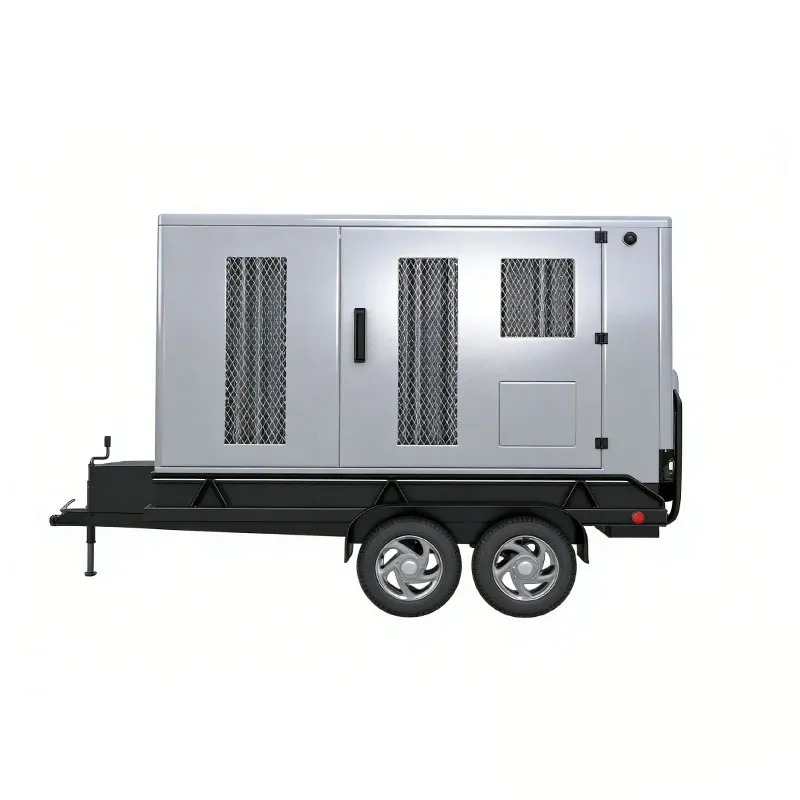
Fixed infrastructure works well when parking patterns and long-term demand are known. Yet not every site is stable. A depot may be expanding. A parking operator may be testing demand. A roadside service company may need to reach stranded vehicles. In these cases, a mobile EV charging solution can fill the gap.
Mobile equipment brings charging to the vehicle. It may take the form of:
- A mobile charging robot
- A battery-powered mobile charger
- A movable DC fast charger
- A vehicle-mounted emergency power unit
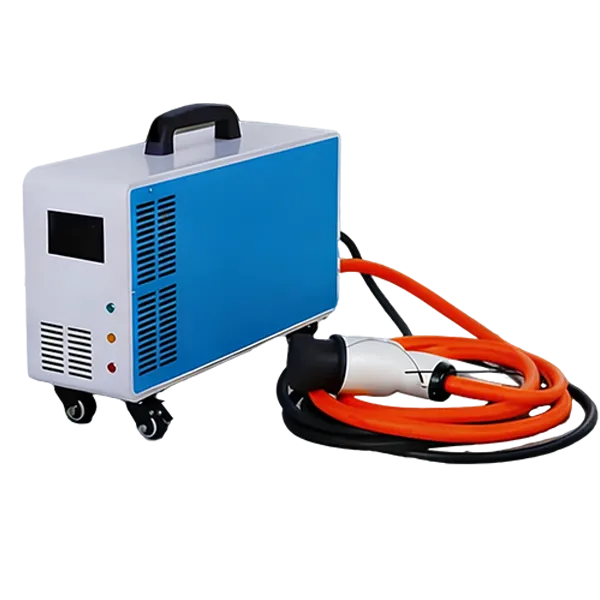
- A portable DC EV charger
- Araçlar arası şarj ekipmanı
At TREASURE, our product scope includes mobile charging robots, 7kW/20kW portable DC units, vehicle-mounted emergency equipment, V2V products, battery packs, and BMS/EMS controls. These products support different jobs and should not be treated as the same device.
A portable 7kW or 20kW DC unit uses an available input source to provide flexible charging near the vehicle. A battery-integrated mobile unit stores its own energy and can support sites where grid power is limited or unavailable. A charging robot moves within a parking or fleet environment. A vehicle-mounted unit supports roadside service. V2V equipment manages energy transfer from a suitable source vehicle or mobile energy platform to the receiving EV.
When mobile equipment makes sense
- A permanent station cannot be installed quickly
- Parking positions change often
- Fixed ports are full during peak periods
- A fleet needs backup charging
- A driver requires roadside support
- A temporary event needs charging
- Grid expansion is delayed
- A business is testing an on-demand EV charging model
Fixed stations create a permanent charging point. Mobile systems create operational flexibility. Many projects benefit from both.
Illustrative fleet case
A logistics operator has 30 electric vans but only 20 fixed parking bays near installed equipment. Moving vehicles during the night creates extra labor and delays.
A mobile charging unit serves vans parked outside the fixed area. The site keeps its normal parking flow while collecting data for the next infrastructure phase. This is an illustrative example, but it shows how mobile tools can support rapid deployment without replacing long-term planning.
How Can Battery Storage Improve EV Charging Infrastructure?
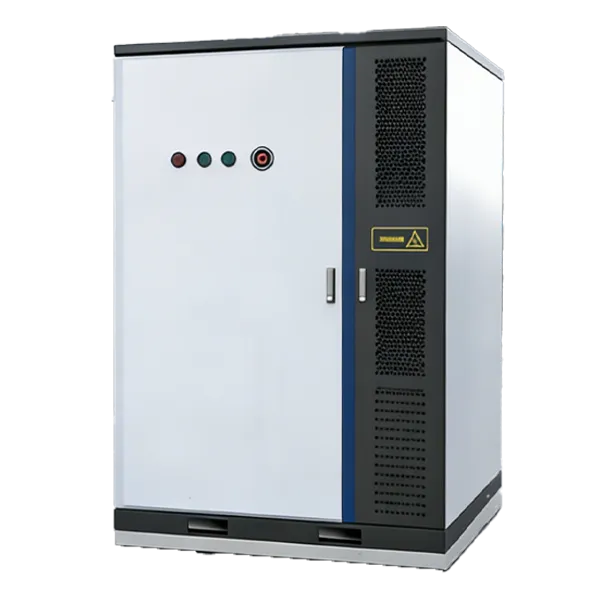
DC equipment can create high, concentrated power demand. Several vehicles may arrive together, even though the station remains lightly used at other times. A battery energy storage system can charge gradually and discharge during busy charging periods.
A battery-supported design may work like this:
Utility Grid ───────┐
│
Solar PV ─────────> EMS ─────> Battery Storage
│ │
Building Loads ─────┘ └────> EV Charge Stations
The battery does not create free energy. It shifts energy across time. The EMS decides when to charge the battery, when to support the EV load, and how much capacity to reserve for backup or other site needs.
Potential benefits include:
- Lower short-term grid peaks
- Better use of solar generation
- Support for constrained utility connections
- Backup for selected charging needs
- Smoother expansion of commercial EV charging
- Coordination between buildings, fleets, and clean energy resources
This approach can be useful for factories, warehouses, commercial buildings, parking operators, microgrids, and fleet depots. It can also support a site before a larger utility upgrade is completed.
At TREASURE, we integrate commercial and industrial BESS with battery packs, BMS protection, EMS control, charging equipment, and project deployment support. We start with the site load profile and vehicle schedule. Then we define the required power, stored energy, charging priority, communication architecture, and expansion plan.
That integrated method is important. A charger supplier may focus only on the station. A battery supplier may focus only on capacity. The buyer needs both systems to work as one operating platform.
## What Makes an EV Charging Network Reliable?
Reliable EV charging depends on more than hardware uptime. Drivers must be able to locate the station, connect successfully, begin payment or authorization, receive the expected amount of energy, and leave safely.
A reliable system requires:
- Correct connector and vehicle communication
- Stable power conversion
- Isı yönetimi
- Cable and plug durability
- Clear screen instructions
- Network connectivity
- Uzaktan alarmlar
- Payment or access control
- Preventive maintenance
- Local service support
- Accurate station status
- Spare parts planning
Fast charging networks must also manage shared power. Two adjacent ports may divide available capacity, depending on equipment design. Drivers should not assume that every labeled 350kW station will deliver 350kW throughout a session.
Electrify America explains that its balanced equipment can provide different output depending on adjacent charger use and vehicle capability. Rivian likewise notes that charging performance varies with battery capacity, temperature, state of charge, charger output, weather, and site conditions. ([Electrify America][10])
For site hosts, network software should provide useful operating data, such as:
| Data point |
Why it matters |
| Station availability |
Helps drivers avoid unavailable equipment |
| Session energy |
Shows how much power each vehicle received |
| Charging duration |
Supports parking and fleet planning |
| Fault alarms |
Speeds up technical response |
| Power demand |
Helps control utility costs |
| User access |
Supports public, employee, or fleet rules |
| Historical trends |
Guides future chargers installed at the site |
As EV adoption increases, reliability will become more important than simply adding hardware. Drivers remember failed sessions. Fleet managers measure missed departures. Site owners measure service calls and lost revenue.
How Is the Latest EV Market Changing Charge Stations?
The latest EV market is pushing charging toward broader connector support, easier payment, higher reliability, better software integration, and greater access between networks.
SAE’s J3400 work is turning the Tesla-developed NACS connector into a standardized charging interface. Many automaker and network plans now include J3400/NACS support alongside existing CCS infrastructure.
The U.S. government is also supporting corridor development through the National Electric Vehicle Infrastructure Formula Program. The Joint Office, created through work involving the Department of Transportation and Department of Energy, provides planning tools, station data, and reporting resources for this electric charging infrastructure.
These changes affect more than passenger vehicles. Charging plans must increasingly consider:
- Commercial vans
- Electric buses
- Heavy trucks
- Service fleets
- Rental vehicles
- A zero-emission vehicle fleet
- Future platforms such as the Tesla Semi
- Mixed CCS and NACS vehicle groups
The growth of public stations and fast charging networks is helpful, but a company should not wait for public coverage to solve every operational need. A fleet requires a charging plan tied to its own routes, shifts, vehicle battery sizes, and service targets.
The direction is clear: charging stations across the country are becoming more connected and more open. Yet every site remains different. A suitable highway station may be unsuitable for a warehouse. A home unit cannot support a bus depot. A mobile emergency system serves a different role from a fixed fast-charging network.

What Should Buyers Ask an EV Charging Solution Provider?
Buying an electric vehicle charging station is a project decision, not simply a hardware purchase. Before choosing a manufacturer, buyers should ask for clear answers about the product, integration, delivery scope, and long-term support.
Product questions
- What input and output ratings are available?
- Which connector standards can be configured?
- Which vehicle types have been considered?
- Is the unit fixed, portable, mobile, or battery-integrated?
- How does the equipment communicate with the EV?
- Which protection functions are included?
Site questions
- What grid capacity is required?
- Can the charger work with solar or BESS?
- What cable routing and parking space are needed?
- Is load management available?
- Can the project expand later?
Operating questions
- Is local or cloud monitoring available?
- Can the system prioritize fleet vehicles?
- How are alarms and updates managed?
- What data can the operator export?
- What installation and training support is included?
Commercial questions
- Which items are included in the quotation?
- Which certifications or local approvals apply?
- What is the production and delivery process?
- Are OEM and ODM configurations available?
- How are spare parts and technical support handled?
HAZİNE supports international B2B projects for factories, warehouses, commercial buildings, EV fleets, parking facilities, and microgrids. Our integrated scope covers C&I energy storage, battery packs, BMS/EMS management, mobile charging robots, portable DC equipment, vehicle-mounted emergency units, and V2V charging.
We use a project-based process:
1. Review the vehicles and operating schedule.
2. Study the site power and parking conditions.
3. Define fixed, mobile, or hybrid charging needs.
4. Select the required battery and charging architecture.
5. Confirm interfaces and target-market requirements.
6. Support production, testing, delivery, and deployment.
This approach helps system integrators, fleet operators, industrial companies, commercial facility managers, and OEM partners build a tailored system instead of purchasing disconnected products.
Frequently Asked Questions About EV Charge Stations
How long does it take to charge an electric vehicle?
Charging time depends on battery size, starting state of charge, vehicle acceptance rate, station output, and temperature. Level 2 may take several hours, while a compatible DC station can add substantial driving range in about 30 minutes.
Is Level 2 or fast charging better for a fleet?
Level 2 suits vehicles parked for several hours or overnight. Fast charging suits short dwell times and high daily mileage. Many fleets use a mix of both.
Can every EV use every public charger?
No. The plug, charging standard, vehicle software, voltage range, and network access must be compatible. Drivers should check connector types before traveling.
What is the difference between a mobile charger and a portable DC charger?
A mobile charger may contain battery storage or move between vehicles. A portable DC charger is compact and movable but may still require an external power source. The product specification should clearly state its energy source.
Can battery storage reduce the grid power needed for EV charging?
Battery storage can reduce short-term peak demand by storing energy earlier and releasing it during busy charging periods. The site still needs an energy source, and the result depends on system sizing and operating strategy.
How can electric car owners find a compatible station?
Vehicle navigation, charging network apps, ChargePoint, Electrify America, Tesla tools, and the Alternative Fueling Station Locator can help drivers find stations and check connector availability.
Build a Practical EV Charging System with TREASURE
The best EV charging station is not always the unit with the highest power. It is the system that fits the vehicles, parking time, grid connection, business model, and growth plan.
A workplace may need managed Level 2 charging. A public site may need fast chargers. A fleet may require BESS-supported DC equipment. A roadside operator may need emergency mobile charging. A large project may combine all four.
TREASURE provides configurable EV charging and energy storage solutions for global B2B customers. By combining charging hardware with battery packs, BMS/EMS controls, mobile equipment, and deployment support, we help project buyers improve charging flexibility and long-term energy management.
To prepare a project proposal, provide the vehicle type, fleet size, daily mileage, parking schedule, site voltage, available grid capacity, target connector, and required deployment date. These details allow our engineering team to define a suitable fixed, mobile, or battery-supported charging solution.

 Mobil EV Şarj Robotları
 Araç Üzeri Acil Güç Kaynağı
 Enerji Depolama Sistemleri
 EV DC Şarj Cihazları Kataloğu
 Araçtan Araca DC Şarj Ekipmanı